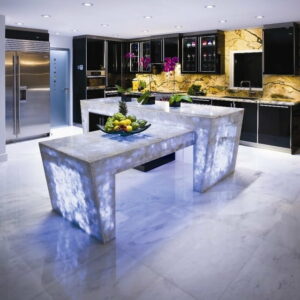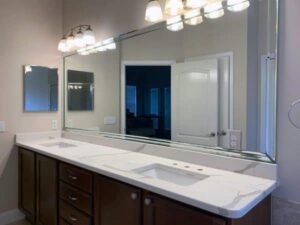

When planning a kitchen or bathroom remodel, selecting the right countertop is one of the most critical decisions you will make. It dictates the room’s aesthetic, influences your daily maintenance routine, and significantly impacts your home’s resale value. Among the premium surfaces on the market today, Cambria stands out as a luxurious, high-performing, and environmentally responsible choice.
But navigating the world of engineered stone can be overwhelming. Homeowners are bombarded with industry jargon, competing brands, and an endless sea of color swatches. How do you know if Cambria is truly the right investment for your home?
This comprehensive buyer’s guide will demystify the selection process. We will dive deep into how to pair Cambria’s breathtaking patterns with your cabinet colors and lighting, explain the real-world value of their health certifications, provide a head-to-head comparison of Cambria vs quartz countertops from other manufacturers, and outline the maintenance required to keep your surfaces looking pristine for decades.

1. The Cambria Difference: What Makes It Premium?
Before diving into design, it is essential to understand what exactly Cambria is. While natural stone like granite or marble is quarried directly from the earth and sliced into slabs, quartz countertops are engineered.
Cambria is a family-owned, American-made company based in Minnesota. Their surfaces are crafted from up to 93% pure, natural quartz—one of the hardest minerals on Earth. This quartz is combined with a small amount of advanced binders and pigments to create a slab that is stronger than granite, entirely nonporous, and capable of mimicking the sweeping veins of natural marble without the associated fragility.
Because of this proprietary manufacturing process, Cambria offers a transferable Full Lifetime Warranty, a rarity in the industry that provides homeowners with unparalleled peace of mind.
2. Design Selection: Pairing Patterns with Cabinet Color
With over a hundred distinct designs ranging from subtle neutrals to bold, dramatic statements, choosing a Cambria pattern can feel daunting. The secret to a cohesive kitchen or bathroom lies in harmonizing your countertop with your cabinetry.
Here is how interior designers approach matching Cambria quartz with different cabinet colors:
Crisp White Cabinetry
White cabinets offer a blank canvas, giving you the ultimate freedom to either blend or contrast.
- For a Seamless, Classic Look: Pair white cabinets with subtly veined, light-toned Cambria designs like Torquay or Ella. This creates a light, airy, and expansive feel, perfect for smaller kitchens or coastal-inspired homes.
- For a Bold, Dramatic Statement: Use high-contrast designs like Blackbrook or Clairidge. A dark, moody countertop against crisp white cabinets grounds the space and adds a striking, modern focal point.
- For Show-Stopping Elegance: Opt for a white base with bold, sweeping veins, such as Brittanicca. This provides the luxurious look of Italian marble while tying effortlessly into the white cabinetry.
Dark Wood and Espresso Cabinetry
Dark cabinets bring warmth and richness to a space, but they require careful countertop pairing to prevent the room from feeling cave-like.
- To Brighten the Space: Choose light, warm neutrals. Designs like Colton or Summerhill introduce creamy whites and subtle tans that reflect light and beautifully offset the heavy tones of dark wood.
- To Enhance the Warmth: Look for designs with gold or copper veining, such as Annicca. The metallic undertones will pull out the natural warmth of the wood grain, creating a cohesive, incredibly inviting environment.
Natural Oak and Walnut Cabinetry
Mid-tone woods are experiencing a massive resurgence in modern organic and Scandinavian designs.
- Earthy and Grounded: Pair natural woods with soft grays or taupes, such as Ironsbridge or Greystone. These muted tones complement the wood without competing with its natural grain.
- Nature-Inspired Contrast: Consider designs with subtle green or blue undertones, like Sutherland. These earthy hues mimic the colors found in nature, creating a calming, biophilic environment.
Painted Cabinets (Blues, Greens, and Grays)
Colorful cabinetry is a popular way to inject personality into a kitchen.
- Let the Cabinets Be the Star: If you have bold navy blue or forest green cabinets, opt for a quiet, understated countertop like Whitney or Newport.
- Tie it All Together: Look for a Cambria design that features subtle flecks or veins that match your cabinet paint. A white quartz with a faint gray-blue vein perfectly complements a slate-blue kitchen island.
3. The Impact of Lighting on Your Quartz Selection
Even the most beautiful quartz slab can look entirely different depending on the lighting in your home. Before finalizing your decision, you must consider both natural and artificial light.
Natural Light vs. Artificial Light
If your kitchen features expansive windows and abundant natural sunlight, dark countertops will look vibrant, and intricate veining will be highly visible. However, if your kitchen relies heavily on artificial lighting, dark counters may absorb the light, making the room feel smaller. In lower-light environments, lighter countertops with reflective surfaces are highly recommended.
Choosing Your Finish: Polished vs. Cambria Matte®
Cambria offers many of its designs in two distinct finishes, both of which interact with light differently:
- Polished Finish: This high-gloss surface reflects light beautifully, making spaces feel larger and brighter. It highlights the depth and clarity of the quartz crystals and is the traditional choice for most homeowners.
- Cambria Matte® Finish: This low-sheen, honed finish absorbs light, offering a soft, organic, and velvety appearance. Matte finishes are excellent for brightly lit rooms where glare from under-cabinet lighting or large windows might be an issue. However, keep in mind that matte surfaces can show fingerprints or surface smudges more readily than polished surfaces, requiring slightly more frequent wipe-downs.
4. Health and Safety: What “GREENGUARD Gold” Actually Signals
When researching building materials, you will inevitably encounter various environmental and safety certifications. One of the most important designations to look for is the Cambria quartz GREENGUARD Gold certification. But what does this actually mean for you and your family?
Many building materials—including cabinets, paints, and lower-quality countertops—emit Volatile Organic Compounds (VOCs). These are invisible chemicals that off-gas into your home’s air at room temperature. Over time, high levels of VOCs can cause headaches, dizziness, allergic reactions, and long-term respiratory issues. Because modern homes are built to be highly energy-efficient and airtight, these trapped indoor pollutants can become a serious concern.
The standard GREENGUARD certification ensures that a product meets strict chemical emissions limits, ensuring a healthier indoor environment. However, the GREENGUARD Gold standard takes this a step further.
GREENGUARD Gold includes health-based criteria for additional chemicals and requires even lower total VOC emission levels. It was specifically developed to ensure that products are safe for use in environments where vulnerable populations spend their time, such as schools, daycares, and healthcare facilities.
Because Cambria quartz is GREENGUARD Gold certified, homeowners can breathe easy knowing their kitchen surfaces are actively contributing to healthier indoor air quality. Furthermore, Cambria is NSF-51 certified, meaning it is completely nonporous and approved for use in commercial food preparation zones. It harbors no harmful bacteria, mold, or mildew, making it one of the safest surfaces you can prep food on.

5. The Competition: Cambria vs Quartz Countertops
A common question homeowners ask during the remodeling process is: “If all quartz is engineered stone, isn’t it all the same?” The short answer is no. When comparing Cambria vs quartz countertops from generic or discount brands, several distinct differences emerge in quality, aesthetics, and long-term value.
1. Raw Material Quality and Manufacturing
Many budget-friendly quartz countertops are manufactured overseas using lower-quality quartz and higher ratios of polymer resins. This can result in a plastic-like appearance, a softer surface that is more prone to scratching, and a higher likelihood of the color fading or yellowing over time due to UV exposure.
Cambria is proudly manufactured in the United States. They own their own quartz mines, ensuring that only the highest-grade, purest white quartz goes into their products. Their optimal ratio of 93% natural quartz to 7% binder results in a countertop with diamond-like hardness and unparalleled depth.
2. Design Consistency and Innovation
While other brands offer quartz that looks like quartz, Cambria is renowned for creating quartz that genuinely mimics the organic, unpredictable beauty of natural stone. Their proprietary technology allows for sweeping, through-body veining that looks identical to premium marble or granite. With generic quartz, patterns often look pixelated or repetitive, giving away their manufactured nature.
3. Slab Size and Seams
One of the biggest visual interruptions in a beautiful kitchen is a visible countertop seam. Cambria offers “jumbo” sized slabs (up to 132 inches by 65.5 inches). This massive footprint allows fabricators to cover large kitchen islands and expansive perimeter counters without needing to join two pieces together, resulting in a flawless, seamless finish.
4. The Warranty
Most standard quartz countertops offer a 10-year or 15-year limited warranty that is strictly for the original purchaser. Cambria offers a robust, transferable Full Lifetime Warranty. If you sell your home, the warranty passes to the new buyer—a fantastic selling point that adds tangible value to your property.
6. Care and Maintenance: Keeping the Luster Alive
One of the primary reasons homeowners choose Cambria over natural granite or marble is the absolute ease of maintenance. Natural stone is porous; if it is not chemically sealed once or twice a year, it will absorb wine, coffee, and oil, leading to permanent stains.
Cambria is entirely nonporous. It never needs to be sealed, polished, or reconditioned.
Daily Cleaning
Maintaining your Cambria countertop is incredibly simple. For daily cleaning, all you need is a soft cotton cloth, warm water, and a mild, pH-neutral soap. Wipe up spills as they happen, and dry the surface with a microfiber cloth to prevent water spots.
What to Avoid
While Cambria is incredibly durable, it is not indestructible. To protect your investment, strictly avoid the following:
- Harsh Chemicals: Never use bleach, oven cleaners, drain cleaners, or paint strippers on your quartz. High-pH or strongly acidic chemicals will permanently burn the resin, causing the surface to look cloudy and dull.
- Abrasive Scrubbers: Avoid SOS pads, pumice stones, or abrasive cleansers like Comet or Soft Scrub. These will scratch the polished finish.
- Extreme Heat: No stone surface is heat-proof. Sudden and rapid temperature changes can cause thermal shock, leading the quartz to crack. Never place hot pots, pans, or heat-generating appliances (like slow cookers or electric griddles) directly on the surface. Always use a high-quality closed-weave hot pad or a solid trivet.
7. Frequently Asked Questions (FAQs)
1. Does Cambria quartz need to be sealed?
No. Unlike granite or marble, Cambria is completely nonporous and never requires sealants, waxes, or polishes. Its built-in resistance to moisture prevents staining and bacterial growth permanently.
2. Can I cut directly on my Cambria countertops?
While quartz is highly scratch-resistant (scoring a 7 on the Mohs Hardness Scale), it is not entirely scratch-proof. Cutting directly on the surface with a heavy hand can leave metal marks from the knife or potentially dull your cutlery. We always recommend using a cutting board.
3. Is the Cambria Matte® finish harder to keep clean than the polished finish?
Because the matte finish lacks the high-gloss protective sheen, it tends to show everyday surface marks, fingerprints, and smudges more visibly than polished designs. However, these marks are easily wiped away with warm water and mild soap. The overall durability and stain resistance remain exactly the same.
4. How does the cost of Cambria compare to natural granite?
Cambria is a premium product, and its pricing reflects that. Generally, it is priced comparably to high-end, exotic granites. While you can find budget-grade granite for less, investing in Cambria pays off over time through zero maintenance costs and the lifetime transferable warranty.
5. Can I use Cambria quartz for an outdoor kitchen?
Cambria is not recommended for outdoor installations. The pigments and resins used to bind the quartz can fade, discolor, or warp when exposed to direct, prolonged ultraviolet (UV) sunlight and extreme weather elements.
6. Will my countertops have visible seams?
Thanks to Cambria’s jumbo slabs, many kitchen islands and smaller counter runs can be installed seamlessly. However, for very large or uniquely shaped kitchens, a seam may be necessary. Professional fabricators are highly skilled at matching the veins and using color-matched epoxy to make seams as inconspicuous as possible, though they will never be 100% invisible.
7. What exactly does the Full Lifetime Warranty cover?
Cambria’s warranty covers any manufacturing defects that result in product failure when the countertop has been fabricated and installed by a certified professional. It does not cover damage caused by user error, such as dropping a heavy cast-iron pot on the edge (causing a chip), placing a hot pan directly on the surface (causing thermal shock), or using unauthorized chemical cleaners.
8. Finding Your Perfect Slab in Florida
Selecting the right countertop is a tactile, visual experience. While looking at photos online is a great starting point, nothing compares to seeing the depth, clarity, and true color of a Cambria slab in person.
If you are a homeowner in Central Florida searching for premium surfaces, finding the right Cambria quartz Orlando dealer is your first step. Our local showroom allows you to view expansive slabs under varying lighting conditions, ensuring you know exactly what will be installed in your home.
Ready to begin your design journey? We invite you to explore our full quartz collection to see the diverse range of styles available. If you want to see how these beautiful surfaces look in real-world applications, browse through our view our project gallery for inspiration.
When you are ready to bring your vision to life, contact our design team to schedule a personalized consultation. We will help you navigate the colors, finishes, and edge profiles to create a space that is as durable as it is breathtaking.