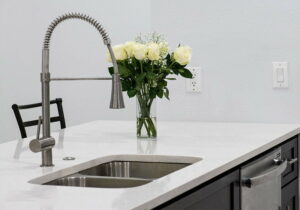

There is a specific moment that happens in almost every kitchen showroom in America. A homeowner runs their hand across a slab of Calacatta Gold or Carrara, eyes widening at the soft, milky white background and the dramatic grey veining. They turn to the designer and say, “This is it. This is the one.”
And then, the designer sighs. “That’s marble,” they say, dropping their voice to a warning whisper. “Are you sure you’re ready for the maintenance?”
For US homeowners, marble represents the pinnacle of classic kitchen design. It feels historic, luxurious, and organic in a way that engineered quartz tries to mimic but never quite captures. But along with its beauty comes a reputation for being high-maintenance, fragile, and unforgiving. The fear of ruining a five-figure investment with a single spilled glass of Pinot Noir keeps many people up at night.
So, are marble countertops worth it? The answer isn’t a simple yes or no—it depends on your personality, your tolerance for “patina,” and where exactly you plan to put it. This guide cuts through the fear-mongering to give you the reality of living with marble, distinguishing the myths from the chemistry, and offering smart strategies to keep it beautiful.

1. The Science of the Stone: Etching vs. Staining
To understand if you can live with marble, you must understand exactly how it damages. Most homeowners use the word “stain” to describe any mark on a countertop, but in the world of marble, there are two distinct enemies: Etching and Staining.
The Real Villain: Etching
If you take nothing else away from this article, let it be this: Sealing your marble does not prevent etching.
Marble is a calcium carbonate stone (essentially, hard limestone). When it comes into contact with acid, a chemical reaction occurs instantly. The acid eats away a microscopic layer of the stone’s surface. This physical damage is called an etch.
- What it looks like: A dull, whitish spot that is most visible when light hits it at an angle. If you have a polished countertop, an etch looks like a matte scar on the shiny surface.
- The Culprits: Lemon juice, tomato sauce, vinegar, wine, soda, pickles, and even some harsh cleaning products.
- The Reality: You cannot seal against physics. If you cut a lemon on a bare marble countertop, you will leave a mark. This is not a stain; it is a change in the texture of the stone itself.
The Secondary Villain: Staining
Staining is different. Because marble is porous, liquids can seep into the stone’s pores and leave a color deposit behind.
- What it looks like: A dark or colored spot (red from wine, brown from oil, yellow from spices) that has absorbed into the stone.
- The Culprits: Red wine, oil, turmeric, coffee, rust.
- The Reality: Unlike etching, staining can be largely prevented with a good sealer. If your marble is properly sealed, you have a generous window of time to wipe up spills before they penetrate.
2. The Finish Factor: Honed vs. Polished
Your choice of finish is the single biggest factor in how much your marble maintenance will stress you out.
Polished Marble
This is the glossy, mirror-like finish you see in grand hotel lobbies and Italian palazzos.
- Pros: It is virtually stain-proof when sealed because the pores are closed tight. It makes the colors pop and feels elegant.
- Cons: It is an etching nightmare. Because the surface is so perfect and reflective, the dull, matte scar of an acid etch stands out aggressively. A single ring from a margarita glass will be visible from across the room.
- Verdict: Best for low-traffic areas or vertical surfaces (backsplashes) where acidic foods won’t touch it.
Honed Marble
This is a matte, satin finish that has become the standard for American kitchens.
- Pros: It hides etching beautifully. Because the stone is already matte, an acid etch (which creates a matte spot) blends in. Over time, a honed counter develops a soft, worn patina that looks intentional rather than damaged.
- Cons: It is more porous than polished marble. The pores are more open, meaning it is more susceptible to absorbing oils and colors.
- Verdict: The superior choice for kitchens. While you have to be diligent about sealing it to prevent stains, you won’t have a heart attack every time someone cuts a lime.

3. Strategic Placement: Where Marble Works Best
You don’t have to go “all or nothing.” Smart design means placing marble where its properties are an asset, and using tougher materials where they are a liability.
The Baking Station (The “Pastry Zone”)
Professional bakers and pastry chefs have used marble for centuries, and not just for looks. Marble is naturally cooler than room temperature. This thermal property makes it the absolute best surface for rolling out pie crusts, tempering chocolate, and kneading dough, as it prevents the butter from melting too quickly.
- Strategy: If you are afraid to do the whole kitchen in marble, lower a section of your island to table height and top it with a slab of honed Carrara. It creates a dedicated baking zone that is functional and beautiful.
The Bathroom Vanity
Bathrooms are generally safer zones for marble than kitchens. Toothpaste and soap are alkaline, not acidic, so they won’t etch the stone the way tomato sauce does.
- Risk Factors: Watch out for cleaners (many bathroom sprays are acidic) and certain beauty products like nail polish remover or glycolic acid face washes.
- Strategy: A marble vanity adds a spa-like luxury that increases home value. Just ensure you use a tray for your toiletries to prevent oil rings.
The “Low-Traffic” Island
If you have a large kitchen with perimeter counters and a central island, consider mixing materials.
- Strategy: Use a bulletproof material like black granite, soapstone, or quartz on the perimeter counters near the stove and sink—where the messy, acidic cooking happens. Save the dramatic Calacatta marble for the island, which is used mostly for serving, eating, and entertaining. This gives you the “wow” factor without the daily stress.
4. Care Rules That Prevent Heartbreak
If you decide to take the plunge, you need to change your cleaning habits. You cannot treat marble like Formica. Here are the non-negotiable rules for living with marble.
Rule #1: The Seal is Real
You must seal your marble. When it’s installed, the fabricator will seal it, but you need to keep it up.
- The Frequency: For honed marble in a busy kitchen, seal it every 6–12 months.
- The Test: Pour a little water on the counter. If it beads up, you’re safe. If it soaks in and creates a dark spot, it’s time to reseal.
- The Product: Use a high-quality impregnating sealer. It’s an easy DIY job: wipe it on, let it sit, wipe it off.
Rule #2: Ban the Green Scrubby
Never, ever use the rough green side of a sponge on marble. It contains abrasives that will scratch the stone physically. Use a soft microfiber cloth or a non-abrasive blue sponge.
Rule #3: pH Neutral Only
Throw away the vinegar, the Windex, and the bleach. You need a pH-neutral cleaner. Mild dish soap and warm water are perfectly fine for daily cleaning. For a deeper clean, buy a dedicated stone cleaner.
Rule #4: The Poultice Trick
If you do get a stain—say, a stubborn oil spot from a pizza box—don’t panic. You can draw it out with a poultice.
- DIY Recipe: Mix baking soda and water (or acetone for oil stains) into a thick paste like peanut butter. Spread it over the stain, cover it with plastic wrap, tape down the edges, and poke a few holes in the plastic. Let it dry for 24–48 hours. As the paste dries, it pulls the stain out of the stone.
Rule #5: Embrace the “Patina”
This is a psychological rule. If you are the type of person who needs your home to look brand new forever, marble is not for you. Marble ages. It scratches, it etches, it changes. In Europe, this is seen as a sign of life and history. If you can shift your mindset to view these imperfections as “living finish” rather than “damage,” you will be much happier.
5. Alternatives and Accents
If reading this has convinced you that you aren’t ready for a full marble countertop, there are smart ways to get the look without the commitment.
Marble Accents
- The Backsplash: Use marble tiles or a solid slab on the wall. Vertical surfaces rarely encounter lemons or red wine spills. It provides the visual drama without the risk.
- The Fireplace Surround: A marble fireplace is elegant and low-risk. It’s a focal point that will never see a tomato.
- Floating Shelves: Replace upper cabinets with chunky marble shelves. They are perfect for stacking white dishes and add texture to the kitchen.
- The Coffee Table: A marble coffee table in the living room is safer than a kitchen counter. Use coasters, and you’ll be fine.
The “Fake” Lookalikes
- Quartz: Engineered stone like Silestone or Caesarstone mimics the look of marble with printed veins. It is non-porous and acid-resistant. It lacks the depth and cold feel of real stone, but it is bulletproof.
- Quartzite: This is the holy grail for many. It is a natural stone (not engineered) that looks like marble but is harder than granite and does not etch. Note: True quartzite is rare and expensive; ensure you test a sample with acid before buying to make sure it isn’t mislabeled marble.
- Porcelain Slabs: New technology allows for giant slabs of porcelain printed with hyper-realistic marble patterns. They are heat resistant and stain-proof, though the edges can sometimes give away the secret.
FAQ: Common Marble Questions
Q: Can I put hot pans on marble?
A: Marble is heat resistant (it’s formed by heat, after all), but it’s not heat proof. Putting a scorching hot cast iron skillet directly on cold marble can cause “thermal shock” and crack the stone. Always use a trivet.
Q: Will honed marble stain more than polished?
A: Yes, slightly. Because the pores are more open, it absorbs liquids faster. However, if you keep it sealed, this risk is minimal. The benefit of hiding etch marks usually outweighs the slightly higher stain risk for most homeowners.
Q: Can I fix etching myself?
A: For polished marble, yes. You can use a marble polishing powder (like tin oxide) to buff out minor etch marks. For honed marble, it’s trickier. You can try to scrub it with a mild abrasive to blend it in, but you risk creating a spot that doesn’t match the rest of the finish. Deep restoration is best left to professionals.
Q: Why is my marble turning yellow?
A: This can happen for a few reasons. In white marble containing iron, water can cause the iron to oxidize (rust), creating yellow/brown stains. It can also be caused by cheap wax coatings or improper sealers yellowing over UV exposure.
Q: Is marble expensive?
A: It varies wildly. Carrara (the classic grey-veined marble) is actually one of the more affordable natural stones, often cheaper than quartz. However, rare luxury marbles like Calacatta Gold or Statuario can cost three to four times as much.
Q: Does marble increase home resale value?
A: Generally, yes. “Natural stone” is a top keyword for homebuyers. Even if it has a little patina, real marble signals luxury and quality craftsmanship that can set a home apart in a crowded market.
The Bottom Line
Marble is not just a countertop; it’s a relationship. It requires care, attention, and a bit of forgiveness. If you are willing to seal it yearly and wipe up spills as they happen, the reward is a timeless, luminous surface that no man-made material can truly replicate. If you want the “install it and forget it” experience, stick to quartz. But for those who love the romance of the stone, the beauty is absolutely worth the reality.