Granite has been used since the days of the Egyptian pyramids, a testament to its durability and timeless appeal. Over centuries, its applications have evolved, leading to various design innovations.
One of the most intriguing advancements is leathered granite, a modern finish offering a textured, non-shiny surface. If you’re considering leathered granite countertops, here’s what you need to know:
How Is Leathered Granite Made?
While granite is a naturally occurring stone, leathered granite undergoes an intricate process to achieve its unique texture.
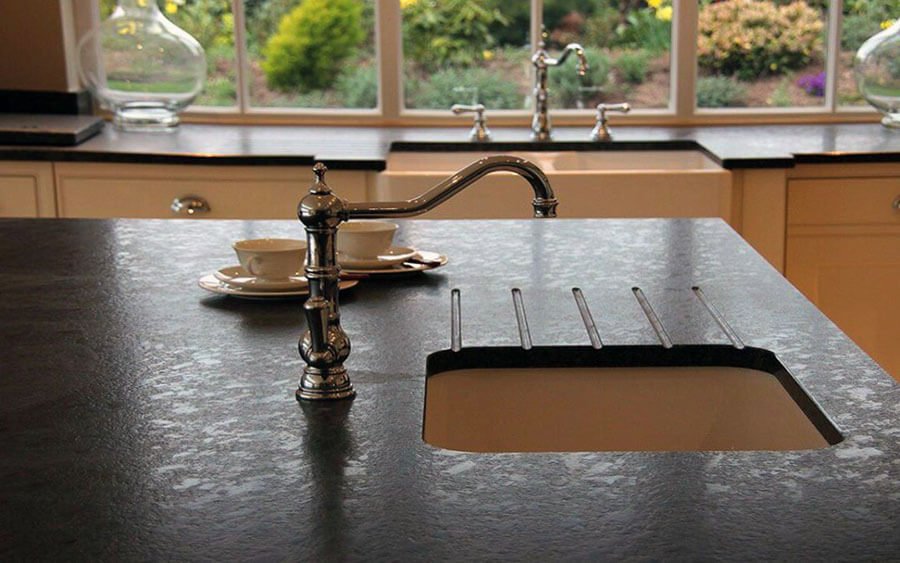
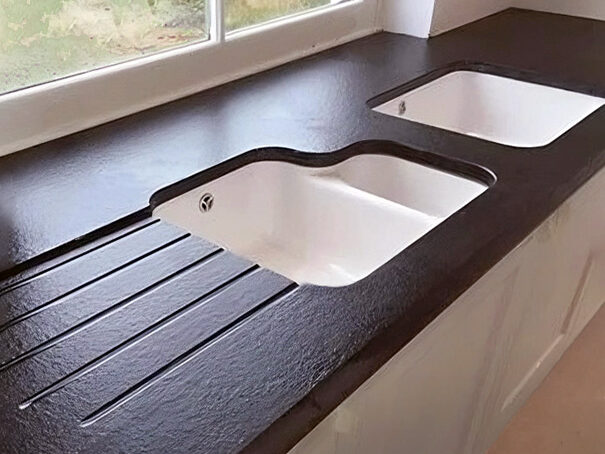
The standout feature of leathered granite is its non-shiny, textured surface. Covered in natural pits and fissures, these characteristics create the distinctive feel of leathered granite countertops.
To achieve this look, a standard granite slab is brushed with diamond-tipped tools. The depth and intensity of the texture depend on how many times the brushes pass over the surface, resulting in a matte, textured finish with a luxurious appeal.
Pros And Cons Of Leathered Granite Countertops
Natural Look
The differential factor in this leather vs. polished granite game is that of appearance and texture. The dull, traditional look of leathered granite brings your house an exotic charm and a sense of antiquity. Unlike its counterpart, which is often overlooked in the kitchen setting, leathered granite tends to grab the viewer’s attention.
Low-Maintenance
Granite is already a low-maintenance, stain-proof material. When leathered, its stain-repellant quality grows multiple folds. Because leathering tightens the pores present on the granite’s surface, so no spillage can’t coalesce within them.
The only downside to leathered granite is that sometimes it can be hard to clean because it’s stain-resistant but not dust-repellant. So, dust particles can reside in the pits and fissures, giving it a yellowish tint.
Hides Fingerprints, Water Spots and Smudges
A leathered surface scatters light instead of reflecting it, so the fingerprints and water rings that show up constantly on polished black granite simply disappear. In a busy Florida kitchen this is the single most-mentioned reason our clients choose leathering.
Where Leathered Granite Falls Short
- Scratches show more easily than on a polished slab — the textured surface has no hard glaze to protect it.
- Crumbs and dust settle in the texture. It is stain-resistant, not dust-resistant, and the pits need a brush rather than a cloth.
- It is still a less common choice, so a buyer who expects glossy granite may see it as personal taste rather than a selling point.

Leathered Granite Countertops Popular Colors
Black Galaxy
A bold black granite with shimmering gold and silver specks, adding elegance and a starry-night allure to any space.
Antique Brown
A warm, rich brown granite with subtle patterns, offering a natural, earthy feel perfect for cozy and timeless designs.
Absolute Black
A sleek, solid black granite with a matte finish, delivering a minimalist and modern aesthetic with effortless sophistication.
Steel Gray
A medium-gray granite with a soft, consistent texture, ideal for contemporary spaces and versatile enough to complement any decor.
Fantasy Brown
A soft grey-and-brown marbled stone with flowing veining. Leathering suits it especially well — it calms the movement and removes the glare that makes polished Fantasy Brown look busy under kitchen lighting.
Common Problems With Leathered Granite (And How to Avoid Them)
Leathered granite is durable and forgiving, but there are four complaints we hear often enough to plan around:
- A dull or yellowish film. This is almost always dust and soap residue caught in the pits, not damage to the stone. A soft handheld brush and warm soapy water clears it; avoid oily “granite polish” sprays, which build up in the texture.
- Texture varies between slabs. Leathering depth depends on how many passes the diamond brushes make, so two slabs of the same granite can feel noticeably different. Approve the actual slab, not a sample tile.
- Not every stone leathers well. Dense, dark granites take the finish beautifully; softer, heavily veined stones can end up looking uneven.
- Scratches on lighter stones. On pale granite a scratch catches the light. Dark leathered granite hides wear far better.
Is Leathered Granite More Expensive?
Yes — but less than most homeowners expect. Polished is the default finish and is included in the base price of virtually every slab. Leathering is an added fabrication step, and in the Central Florida market it typically adds:
- Roughly $10–$25 per square foot over the polished price.
- About $500–$1,500 on a typical kitchen, depending on stone and layout.
- Honed sits in between, at roughly $5–$15 per square foot extra.
The finish does not change the price of the stone itself, so the most affordable route to a leathered countertop is a mid-tier granite with a leathered finish rather than a premium slab left polished.
How to Care for Leathered Granite Countertops
- Warm water and a little dish soap for routine cleaning.
- A soft handheld brush to lift crumbs and dust out of the texture — this is the one habit that keeps leathered granite looking new.
- Skip acidic cleaners, bleach and abrasive pads.
- Reseal roughly every 12 months. Leathered and honed surfaces are slightly more open than polished granite, which needs sealing only every 18–24 months. Simple test: drip water on the surface, and if it darkens within a few minutes it is time to reseal.
Leathered vs Honed vs Polished: Which Finish Is Right for You?
Leathering is one of three finishes you will be offered at the slab yard. In short: polished gives the deepest colour and the easiest wipe-down but shows every fingerprint and glares under Florida sun; honed is matte and nearly fingerprint-proof; leathered adds texture on top of that matte look and hides the most. For outdoor and lanai kitchens we usually recommend leathered, because it disguises salt mist and pool-water spotting.
For a full breakdown of all three, including sealing schedules and what each costs, see our guide to honed vs polished vs leathered countertop finishes.
Conclusion
Leathered granite is more than just a textured alternative to polished granite—it’s a statement of elegance and sophistication. Its natural, matte finish creates a unique aesthetic that can transform any space, adding a timeless charm and a touch of luxury. Whether you’re looking for a standout feature in your kitchen, bathroom, or outdoor space, leathered granite offers durability, low maintenance, and a striking visual appeal that polished finishes often cannot achieve.
While the qualities of leathered granite are similar to polished granite, its texture and appearance often take it a step further, making it an excellent choice for those who want something truly distinctive. From the dramatic allure of Black Galaxy to the earthy warmth of Antique Brown, the versatility of leathered granite ensures there’s a perfect match for every style and space.
If you’re ready to enhance your home with leathered granite, we’re here to help every step of the way. Visit our website to explore our extensive catalog of premium granite countertops and discover how our professional installation services can bring your vision to life. Let us make your granite installation journey effortless, reliable, and tailored to your needs.