
Designing a home bar is one of the most exciting residential projects you can undertake. Whether it is a moody basement speakeasy, a bright poolside cabana bar, or an elegant wet bar tucked into your living room, the focal point of the space will undoubtedly be the bar top.
However, a bar top is not just a visual centerpiece; it is a high-functioning work surface. Unlike a standard kitchen island, a bar top is subjected to a unique and aggressive array of abuses. We are talking about acidic lime wedges left out overnight, red wine spills, heavy glass liquor bottles being slammed down, sticky syrups, and melting ice. If you want to enjoy your space rather than aggressively policing your guests with coasters, you need to choose the best countertop for bar top use.
In this comprehensive guide, we will break down the chemistry of cocktail spills, highlight which stones to avoid, recommend the ultimate alternatives, and cover critical design details like edge profiles and sink cutouts.
The Enemy of the Bar Top: Etching vs. Staining
Before diving into specific stone bar top ideas, it is crucial to understand the difference between the two main ways a countertop can be ruined: staining and etching.
Staining occurs when a liquid (like red wine or dark rum) penetrates the pores of a material, leaving a discolored mark behind. Stains can often be lifted with poultices, and they can be prevented by regularly applying a high-quality sealant.
Etching, on the other hand, is physical damage to the stone. It is a chemical reaction that occurs when an acid comes into contact with calcium carbonate, a mineral found in certain natural stones. The acid essentially eats away a microscopic layer of the stone’s polished surface, leaving behind a dull, whitish, rough mark that looks like a water ring but cannot be wiped away.
Which Stones Etch (and Why)?
If a stone contains calcium carbonate, it will etch when exposed to the acids common in mixology (citric acid from lemons and limes, tartaric acid from wine, and acetic acid from certain mixers).
Do NOT use these stones for a high-traffic bar top unless you embrace imperfections:
- Marble: The classic Italian beauty is packed with calcium carbonate. A single lime wedge or a splash of margarita mix left on the surface will leave a permanent dull ring within minutes.
- Limestone: Highly porous and highly reactive to acids.
- Travertine: A form of limestone, meaning it suffers from the same vulnerability to citrus and wine.
- Onyx: Stunning (especially when backlit in a bar setting), but it is a calcareous stone that etches easily and is quite fragile.
What to Use Instead
If you love the dramatic veining of marble or the sleek look of limestone, do not despair. Modern engineering and harder natural stones offer incredible alternatives that provide the exact same aesthetic without the heartbreak of etching. You need a countertop material that won’t stain or etch under the pressure of a cocktail party.

The Best Countertop Materials for Home Bars
Here are the top-performing materials for a stress-free, beautiful home bar.
1. Quartz (Engineered Stone)
The Verdict: The MVP of Home Bars
Quartz is an engineered stone made from roughly 90% crushed natural quartz mixed with 10% polymer resins and pigments. Because it is engineered, it is completely non-porous. This means it is the ultimate countertop material that won’t stain. You can spill a bottle of Cabernet on white quartz, leave it until morning, and wipe it away with a damp cloth. Furthermore, because it contains no calcium carbonate, it is completely immune to etching from citrus juice. It also requires zero sealing or maintenance. If you want the look of marble without the maintenance, “marble-look quartz” is your best bet.
- Pros: Non-porous, stain-resistant, etch-proof, no sealing required, wide variety of colors.
- Cons: Not heat resistant (do not put hot pans on it, though rarely an issue at a bar), can look slightly uniform compared to natural stone.
2. Granite
The Verdict: The Natural and Durable Classic
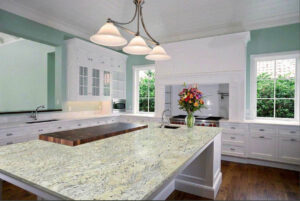
If you want genuine stone bar top ideas that bring the rugged beauty of nature indoors, granite is a phenomenal choice. Granite is an igneous rock formed from magma. It is incredibly hard, scratch-resistant, and most importantly, it does not contain calcium carbonate, so it will not etch from lemons or limes. However, granite is naturally porous. To prevent dark liquors and wines from staining it, you must apply a high-quality impregnating sealer once a year.
- Pros: Natural beauty, highly scratch resistant, heat resistant, immune to acid etching.
- Cons: Requires annual sealing to prevent staining.
3. Quartzite
The Verdict: The Beautiful (but Tricky) Beast
Quartzite is a natural metamorphic rock that started out as sandstone. Through intense heat and pressure in the earth, it transforms into an incredibly hard stone. Visually, quartzite often features the sweeping, elegant veins of marble, making it highly sought after. Functionally, true quartzite is harder than glass and highly resistant to etching.
- The Catch: Slab yards frequently mislabel marble or “soft quartzite” as true quartzite. If you buy a mislabeled slab, your bar will etch. Always ask for a sample and do the “lemon test” (leave lemon juice on it for 15 minutes) or the “glass test” (true quartzite will scratch a glass tile) before purchasing.
- Pros: Looks like marble but performs closer to granite, very hard, scratch-resistant.
- Cons: Expensive, requires sealing, high risk of buying a mislabeled, etch-prone stone.
4. Sintered Stone / Porcelain
The Verdict: The Indestructible Innovator
Brands like Dekton and Neolith have popularized sintered stone and porcelain slabs. These are made by taking natural minerals and putting them through extreme heat and pressure (mimicking the earth’s natural rock-forming process, but sped up). The result is a surface that is practically indestructible. It is entirely non-porous (no staining), completely immune to acids (no etching), UV resistant (great for outdoor bars), and cannot be scratched by knives or glass bottles.
- Pros: Zero maintenance, stain-proof, etch-proof, scratch-proof, great for outdoor use.
- Cons: The pattern is only printed on the surface (it doesn’t go through the edge), can chip upon heavy impact on the edges, requires specialized fabricators.
5. Soapstone
The Verdict: The Moody Speakeasy Vibe
Soapstone is a dense, natural stone that is completely non-porous. It is so chemically inert that it is traditionally used for high school chemistry lab tables. It will absolutely not stain from wine, nor will it etch from acids. It naturally comes in shades of gray and turns a rich, dark charcoal/black when oiled.
- The Catch: Soapstone is quite soft. Sliding heavy glass bottles across it will cause micro-scratches. However, many people love the lived-in, rustic patina it develops, and scratches can easily be buffed out or disguised with a coat of mineral oil.
- Pros: Impervious to chemicals and acids, non-porous (no sealing needed), beautiful matte finish.
- Cons: Scratches and dents easily, requires regular oiling to maintain a dark, even color.
6. Wood / Butcher Block
The Verdict: The Traditional Tavern Look
Wood brings incredible warmth and acoustics to a room (glasses clinking on wood sound much softer than on stone). However, wood is highly porous and susceptible to water damage, rot, and rings from wet glasses.
- The Fix: To use wood for a bar top, you cannot use a standard food-safe oil. You must finish it with a highly durable, waterproof barrier. The best options are multiple coats of a marine-grade polyurethane (used on boats) or a pour-on epoxy resin. This seals the wood completely, making it impervious to spills.
- Pros: Warm, classic aesthetic, softer impact for glassware.
- Cons: Requires rigorous upfront finishing (epoxy or marine varnish), can dent, high maintenance if the seal is broken.
The “Material-by-Drink” Compatibility Chart
Use this quick-reference guide to see how different materials hold up to the harsh realities of bartending.
| Countertop Material | Red Wine (Stain Risk) | Limes/Citrus (Etch Risk) | Heavy Bottles (Scratch/Chip Risk) | Maintenance Level |
| Quartz | Excellent (No stains) | Excellent (No etching) | Good (Scratch resistant) | Low (Zero sealing) |
| Granite | Good (If sealed) | Excellent (No etching) | Excellent (Highly scratch resistant) | Medium (Annual sealing) |
| Quartzite | Good (If sealed) | Excellent (If true quartzite) | Excellent (Very hard) | Medium (Annual sealing) |
| Marble | Poor (High stain risk) | FAIL (Severe etching) | Fair (Can scratch) | High (Constant worry) |
| Porcelain/Sintered | Excellent (No stains) | Excellent (No etching) | Good (Surface won’t scratch; edges can chip) | Low (Zero sealing) |
| Soapstone | Excellent (No stains) | Excellent (No etching) | Poor (Scratches very easily) | High (Frequent oiling) |
| Wood (Epoxy Sealed) | Good (Wipes clean) | Good (Wipes clean) | Fair (Can dent under heavy impact) | Medium (Watch for peeling) |
Design Details: Edge Recommendations for Bars
The edge profile of your bar top is about more than just aesthetics; it dictates how comfortable your guests will be leaning against it, and how well it handles spills.
- The Marine Edge (Spill Control): Also known as a “no-drip” edge, this profile features a slightly raised lip around the perimeter of the countertop. It is highly recommended for working wet bars because it prevents spilled drinks or overflowing sinks from cascading down the front of the cabinets and onto the floor.
- Eased Edge / Quarter Round: The most popular modern choice. The edge is flat but the sharp top corner is slightly rounded off. It is clean, contemporary, and comfortable enough for guests resting their forearms on the bar.
- Half-Bullnose: The top edge is completely rounded over, while the bottom remains flat. This is arguably the most ergonomic and comfortable edge for a high-top bar where guests will be leaning heavily on the counter. Water will also drip straight down to the floor rather than running back under the cabinets.
- Ogee Edge: An elegant, S-shaped curve traditional in classic or Victorian designs. While beautiful, the intricate grooves can trap sticky syrups and dust, making cleanup slightly more annoying. The thinner upper edge is also more prone to chipping if hit by a heavy bottle.

Technical Talk: Bar Sink Cutout Notes
If your home bar includes a sink (making it a true “wet bar”), the sink cutout is a critical vulnerability point that requires specific attention during fabrication and installation.
- Undermount vs. Drop-in: Undermount sinks are the gold standard for bars. They allow you to wipe spills, ice, and citrus peels directly from the counter into the sink without hitting a raised rim.
- The Cutout Polish: For undermount sinks, the inner edge of the stone cutout will be exposed. Ensure your fabricator polishes this edge to the exact same finish as the top of the counter to prevent it from absorbing moisture.
- Reveal Style: You can choose a “positive reveal” (the sink rim shows slightly), a “zero reveal” (flush), or a “negative reveal” (the stone overhangs the sink). For bars, a slight negative reveal or zero reveal is best. A positive reveal creates a tiny ledge where gross, sticky cocktail syrups and mold can accumulate over time.
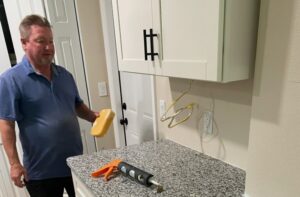
- Waterproofing Porous Materials: If you choose wood or a highly porous stone, the inside edge of the sink cutout is where rot or water damage will begin. This inner rim must be heavily coated with marine epoxy (for wood) or heavily saturated with sealant (for stone), followed by a thick, flawless bead of 100% silicone caulk between the sink flange and the countertop.
- Size Matters: Standard kitchen sinks are too large for typical 24-inch depth bar cabinets. Look for designated “bar sinks” or “prep sinks” which usually range from 15 to 18 inches wide, leaving enough precious counter space for mixing drinks.
7 Frequently Asked Questions (FAQs)
1. Can I use marble for my home bar?
You can, but it is highly discouraged unless you are willing to accept a weathered, “patinaed” look. Because of its calcium carbonate composition, spills from limes, lemons, wine, and soda will instantly etch the surface, leaving permanent dull spots. If you want the pristine look of marble to last, choose a marble-look quartz or porcelain instead.
2. What is the most durable “stone bar top ideas” for an outdoor patio bar?
For outdoor bars exposed to the elements, Granite and Sintered Stone (Porcelain) are the best options. They are UV resistant (they will not fade in the sun) and handle freeze/thaw cycles beautifully. Note: Do not use quartz outdoors, as the UV rays will cause the polymer resins in the material to yellow and warp over time.
3. Does liquor stain quartz?
No. Quartz is an engineered surface that is completely non-porous. Dark liquors, red wine, bitters, and brightly colored cocktail syrups will not penetrate the surface. It is arguably the best countertop material that won’t stain. You can simply wipe away the spill with mild soap and water.
4. How thick should a bar top be?
Standard countertop thickness is 3cm (about 1.25 inches), which is perfect for the working area of a bar. However, for the raised “serving” tier of a bar (where guests sit), a thicker look adds a premium, massive feel. You can achieve this without buying a thicker, heavier slab by having the fabricator create a “mitered drop edge,” which makes the 3cm stone look 2 to 3 inches thick.
5. What is the best “countertop material that won’t stain” or scratch?
Sintered stone (like Dekton) or Porcelain slabs take the crown here. They are 100% non-porous, meaning they cannot stain, and they are fired at such high temperatures that you can practically cut garnishes directly on them without scratching the surface. Quartz is a close second, though slightly less scratch-resistant than porcelain.
6. How do I protect a wood bar top from water rings?
You cannot rely on mineral oil or butcher block wax for a wet bar. To protect wood from condensation rings and alcohol spills, you must seal it completely. Use multiple coats of a high-quality marine varnish (spar urethane), Waterlox, or a two-part pour-on epoxy resin. This creates a hard, plastic-like shell over the wood.
7. Is epoxy a good choice for a DIY bar top?
Yes, epoxy resin is an excellent DIY solution for bar tops. It is completely waterproof, highly durable, and self-leveling. It can be poured over cheap wood, pennies, bottle caps, or painted surfaces to create a custom, high-gloss finish. Just be aware that epoxy can scratch over time, and it can yellow if exposed to direct, heavy sunlight.
Conclusion
Choosing the best countertop for bar top use comes down to balancing your aesthetic desires with your tolerance for maintenance. If you want a stress-free environment where you can mix drinks without worrying about every spilled drop of lime juice or wine, engineered Quartz or Porcelain are your best bets. If you crave the authenticity of nature, a properly sealed Granite or rugged Soapstone will serve you beautifully for decades. Plan your sink cutouts carefully, choose a comfortable edge profile, and get ready to host the best happy hour in the neighborhood.