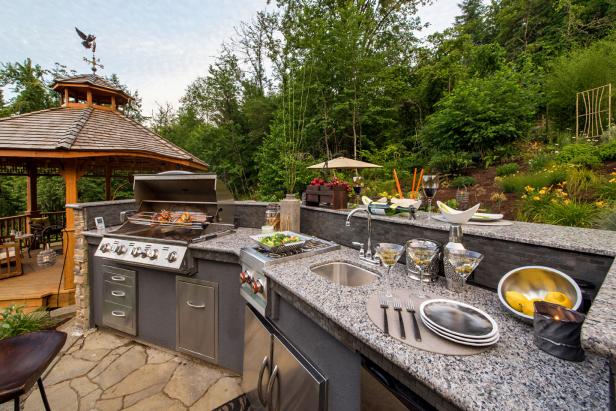
Picture it: it’s a Saturday in July, you’re standing on the lanai with a spatula in one hand and a cold drink in the other, the grill is roaring, and the afternoon sun is hammering down at 92 degrees with the salt breeze drifting in off the Gulf. That gorgeous countertop you just paid good money for is taking the full brunt of Florida’s climate every single day. Choosing the best countertops for outdoor kitchens in Florida isn’t about picking what looks prettiest in the showroom under soft lighting; it’s about picking the one material that won’t yellow, crack, fade, or fall apart after two summers of UV, heat, downpours, and coastal salt air. This is the EdStone honest guide to getting it right the first time.
We fabricate and install outdoor counters across the state, from screened lanais in Tampa to fully exposed grill stations a block from the beach in Naples and Vero Beach. We’ve seen what survives and what surrenders. Let’s walk through it.
Why an Outdoor Kitchen Is Brutal on Countertops in Florida
Indoors, a countertop lives a pampered life: stable 72-degree air conditioning, no sun, no rain, no salt. Outdoors in Florida, that same slab faces a daily gauntlet that would make most indoor materials wave a white flag within a couple of years. Here’s exactly what your counter is up against.
- Relentless UV: Florida gets some of the highest UV index readings in the continental U.S., regularly hitting 10-12 on summer afternoons. UV breaks down resins, binders, and pigments. It’s the single biggest reason certain popular indoor materials simply don’t belong outside.
- Heat and thermal swing: A dark surface in direct Florida sun can reach 150-170°F, hot enough to be uncomfortable to touch. Then a sudden afternoon thunderstorm drops it 40 degrees in minutes. That repeated expansion and contraction stresses materials and adhesives.
- Daily downpours and standing water: Our summer rains arrive fast and hard. Porous, unsealed surfaces drink up water, which feeds staining and mildew; freeze-thaw damage is rare here, but constant saturation is not, and it slowly works its way into any unsealed pore.
- Humidity 60-85%: Year-round moisture in the air keeps surfaces damp and creates a perfect breeding ground for mildew in any pore, seam, or rough texture.
- Salt air on the coast: If you’re within a few miles of the water in Miami, Sarasota, Jacksonville, or the Gulf beaches, salt is corrosive. It pits soft stone, attacks metal fasteners and brackets, and leaves a film that has to be rinsed off.
- Pollen and organic staining: Florida’s pollen seasons coat everything in yellow-green dust, and overhanging oaks and palms drop tannin-rich debris that stains porous stone.
Bottom line: outdoor material selection is a different conversation than indoor. The forgiving choice inside can be the disaster outside. So let’s rank what actually works.
The Best Countertops for Outdoor Kitchens, Ranked
We’ve ordered these by real-world Florida durability, not just looks or price. Every option here can be made to work outdoors with the right fabrication, but they are not equal. When homeowners ask us for the best countertops for outdoor kitchens, this is the short list we keep coming back to.
1. Porcelain / Sintered Stone — The Clear Winner
If you want the single best material for a Florida outdoor kitchen, this is it. Large-format porcelain slabs and sintered stone (think Dekton, Neolith, Lapitec, and similar ultra-compact surfaces) are manufactured under extreme heat and pressure into a dense, non-porous panel that is essentially purpose-built for the outdoors.
- UV-proof: The color goes all the way through or is fired in, and it does not fade or yellow in sunlight. You can put a white or light gray porcelain counter in full Florida sun and it’ll look the same in ten years.
- Heat-proof: You can set a screaming-hot grill grate or a cast-iron pan straight off the burner onto it without scorching. This is the material that genuinely shrugs off heat.
- Scratch- and stain-resistant: Extremely hard surface, non-porous, so salt, pollen, citrus, wine, and barbecue sauce wipe right off and never soak in.
- Low maintenance: No sealing, ever. Soap and water is the entire maintenance routine.
The trade-offs are honest ones: porcelain comes in slabs typically around 12mm thick, so edges are often mitered to look thicker, which takes skilled fabrication. It’s also harder to fabricate than granite and can chip on a sharp impact at an exposed corner if abused. But for a Florida lanai, nothing beats it. If you’re weighing your options, our deep dive on sintered stone vs. porcelain vs. quartz in Florida breaks down the differences between these surfaces in detail.
2. Granite — Excellent and Time-Tested
Granite has been the workhorse of outdoor kitchens for decades, and for good reason. It’s a natural igneous stone that was literally formed in heat, so it laughs at a hot grill. It’s tough, it’s beautiful, and Florida fabricators (us included) have it in stock in countless colors.
- Heat-resistant: Among the most heat-tolerant materials you can buy. Set hot cookware on it without a second thought. For the full picture on which materials take the heat, see our guide on whether you can put hot pans on quartz and granite in Florida.
- UV-stable: Natural stone color doesn’t fade in sunlight the way resin-based products do.
- Durable and hard: Resists scratches and everyday abuse well.
The one catch with granite is that it’s porous and needs periodic sealing, especially outdoors. In Florida’s wet, humid, salty environment we recommend resealing exposed outdoor granite every 6-12 months instead of the annual indoor cadence. A good penetrating sealer keeps water, salt, and stains from soaking in. Choose a tighter-grained granite for an outdoor install, since busy, porous stones absorb more.
3. Quartzite — The Hard, Etch-Proof Natural Stone
Don’t confuse quartzite with engineered quartz; they are completely different materials, and the difference matters a lot outdoors. Quartzite is a 100% natural stone formed when sandstone is fused under tremendous heat and pressure, and it contains no resin whatsoever. That makes it one of the toughest surfaces you can install on a lanai.
- Harder than granite: Quartzite typically rates higher on the Mohs hardness scale than granite, so it shrugs off scratches and abrasion from grill tools, ice chests, and everyday outdoor use.
- Etch-resistant: Because it’s silica-based rather than calcium-based like marble, quartzite doesn’t etch when a splash of citrus, soda, or wine hits it, a real advantage at a bar where drinks get mixed.
- Heat-tolerant and UV-stable: As a natural stone with no resin, it handles a hot pan and won’t yellow or fade in the sun.
The catch is the same as granite: quartzite is porous, so it needs sealing on the same outdoor schedule. Many quartzites also carry a marble-like look with dramatic veining, so it’s a smart way to get that soft, luxe aesthetic with far more durability than real marble. It sits at the premium end of natural stone, but for an outdoor bar it earns its keep.
4. Dekton and Ultra-Compact Surfaces
This overlaps with the sintered-stone category but deserves its own mention because the brand is so common. Dekton is an ultra-compact surface engineered specifically for indoor and outdoor use, with a published UV warranty against fading. It’s a fantastic outdoor choice with the same upsides as porcelain: non-porous, heat-tolerant, no sealing. It tends to sit at the premium end of pricing, but for an exposed coastal install it’s money well spent.
5. Soapstone — The Quiet Performer
Soapstone is an underrated outdoor option in Florida. It’s a non-porous natural stone (so it won’t stain like granite), it’s highly heat-resistant, and it has a soft, matte look that hides water spots beautifully. It does scratch more easily than granite and naturally darkens over time, but many homeowners love that lived-in patina. A coat of mineral oil now and then evens out the color. It’s a great pick for a covered lanai with a relaxed, organic aesthetic.
6. Leathered Dark Granite
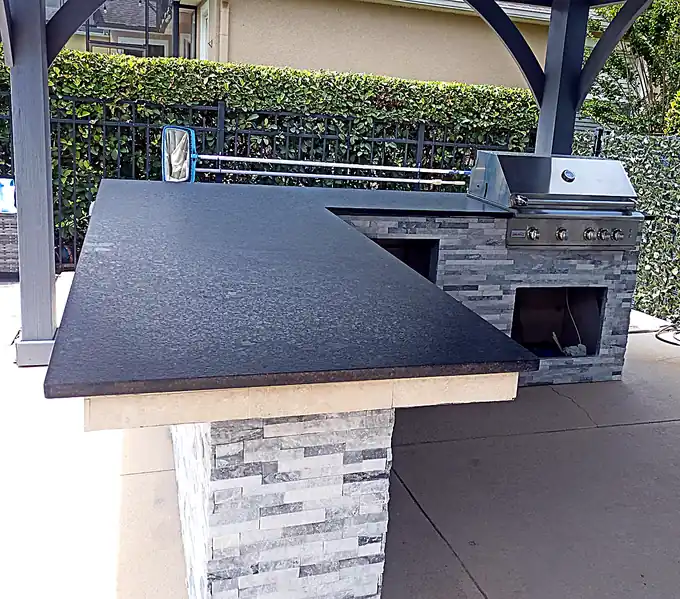
If you have your heart set on a dramatic dark stone, go leathered rather than polished. A leathered (textured matte) finish on a dark granite hides water spots, salt residue, fingerprints, and pollen dramatically better than a glossy surface, and it reduces glare from our intense sun. You still need to seal it, but it’s a smart way to get a moody look that stays presentable outdoors.
Honorable Mention: Concrete
Cast concrete counters can look spectacular and are heat-tolerant, and they let you build integrated sinks and custom shapes. But raw concrete is porous and will need diligent sealing in Florida’s climate to fend off mildew, staining, and salt. It can also hairline-crack as it cures and moves. It’s a viable choice for the right homeowner who wants a one-of-a-kind look and accepts the upkeep, but it’s a maintenance commitment, not a set-and-forget surface.
What to Avoid Outdoors: Quartz and Marble
This is the part of the conversation where we save you from an expensive mistake, so we’ll be blunt.
Never Put Engineered Quartz Outdoors
Engineered quartz is our favorite material for indoor Florida kitchens. It’s roughly 90% ground quartz bound with about 10% polymer resin and pigment, which makes it non-porous, stain-proof, and maintenance-free inside, with no sealing ever required. But that resin is its Achilles’ heel outdoors.
- It yellows under UV: Sustained sunlight degrades the resin binder and pigments, and the surface discolors and yellows, often unevenly. A bright white quartz can turn a dingy cream within a season or two of Florida sun.
- It scorches with heat: The resin begins to soften, discolor, and scorch around 300°F, so a hot grill grate or pan can leave a permanent mark.
- It voids the warranty: Virtually every major quartz manufacturer explicitly excludes outdoor installation from their warranty. Put it on your lanai and you’re on your own.
We love quartz in the right place, and our breakdown of granite vs. quartz countertops in Florida covers where it shines indoors. The lanai is simply not that place. If you want the engineered look outdoors, porcelain or sintered stone gives you a similar clean appearance without the resin problem.
Skip Marble for Outdoor Work Surfaces
Marble is a soft, calcium-based natural stone, and it has two problems outdoors. First, it’s reactive: any acid (citrus from a squeezed lime, a splash of soda, tomato, vinegar) etches the surface, leaving dull spots. Second, it’s porous and stains readily, and outdoor life is full of staining agents. Combine that with salt air and pollen and you have a surface that looks tired fast. If you adore the marble look, get a marble-look porcelain or a hardy quartzite instead, you get the veining with none of the heartache.
Outdoor Kitchen Countertop Ideas That Actually Work in Florida
Material choice settles durability. These are the layout and styling decisions that decide whether the finished kitchen gets used every weekend or becomes an expensive garnish.
The L-Shaped Grill Run With a Prep Wing
The most-requested layout we build. The grill sits on the long leg, with 24″–36″ of landing space either side, and the short leg becomes prep and plating. It keeps hot work away from where people stand and talk.
A Bar-Height Overhang for Seating
A 12″ overhang seats guests without putting them over the grill. In 3cm stone a 12″ overhang needs no support; go past that and you need corbels or a steel plate — outdoors, stainless, not painted steel.
Waterfall Ends on a Freestanding Island
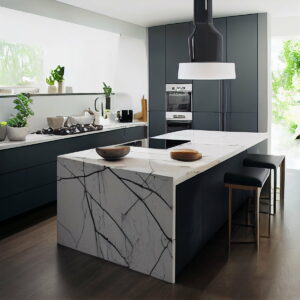
Outdoors an island is seen from every side, so the exposed end matters far more than it does indoors. A waterfall end in porcelain or dark granite finishes it cleanly and protects the cabinet base from rain splash.
Dark Leathered Stone for the Grill Zone, Lighter Stone for Prep
Mixing two surfaces is not a compromise, it is a practical answer: dark leathered granite hides soot and grease around the grill, and a lighter, cooler surface for prep is far more pleasant to touch at midday.
Built-In Sink and Ice Well
If you plan a sink, decide early — the cut-out, the drain run and the freeze-free plumbing all change the counter layout. An undermount stainless bowl in porcelain or granite is the low-maintenance choice.
Bluestone and Other Alternatives
Bluestone comes up often for outdoor kitchens because of its natural, matte look. It works, but it is soft and porous compared with porcelain or granite, stains from grease more readily and needs regular sealing. If you want that flat blue-grey look with far less upkeep, a leathered dark granite or a matte porcelain in a similar tone will outlast it.
Color and Finish: How to Stay Cool and Hide the Mess
Material is the big decision, but color and finish make a real day-to-day difference under the Florida sun.
- Go lighter to stay cooler: Dark surfaces absorb heat. A black polished counter in direct sun can become too hot to comfortably lean on, while a light gray, beige, or white surface stays noticeably cooler. For an uncovered install, lighter is the practical call.
- Choose matte, honed, or leathered finishes: A glossy polished surface shows every water spot, salt streak, and pollen film, and it throws harsh glare in our bright light. Honed and leathered finishes hide spots, cut glare, and stay more presentable between cleanings.
- Pick forgiving patterns: A speckled or movement-rich pattern conceals the inevitable dust, pollen, and water marks far better than a solid color that broadcasts every droplet.
If you want the best of both, a light leathered granite or a light matte porcelain hits the sweet spot for an exposed Florida outdoor kitchen: cooler to the touch, low glare, and good at hiding the daily grime our climate delivers.
Structural Realities: Support, Overhang, Grills, and Sinks
An outdoor counter does more heavy lifting than an indoor one, and the fabrication has to account for it. This is where a real fabricator earns their keep.
- Built-in grills and drop-in burners: Cutting an opening for a grill or burner removes a big chunk of the slab’s structural integrity. The remaining stone bridges around that cutout and must be properly supported underneath, or it can crack from heat stress and weight over time.
- Overhangs for seating: If you want a bar overhang for stools, anything past 10-12 inches of unsupported stone needs steel rods or brackets. Outdoors we favor stainless or galvanized support hardware because ordinary steel rusts in our humidity and salt.
- Sinks and faucet cutouts: Outdoor sinks add plumbing penetrations and another spot for water to find its way under the stone. Edges around the cutout should be sealed thoroughly and the seam detailed to shed water.
- Cabinet base material: The stone is only as good as what it sits on. Outdoor counters belong on weatherproof bases, marine-grade polymer cabinetry, stainless framing, or block-and-stucco, not standard indoor cabinets that swell and rot in humidity.
Covered vs. Uncovered Installs
Where the counter lives changes everything. Under a roofed or screened lanai, you’re shielded from direct UV and the worst of the rain, which widens your material options and slows wear. A fully exposed counter beside the pool or steps from the surf gets the full assault, so it should be porcelain, sintered stone, or Dekton, with stainless hardware and meticulous sealing on any natural stone. The closer you are to the coast, the less you want to gamble.
Maintenance for Coastal Salt Air and Florida Mildew
Even the toughest surface lasts longer with a simple routine. Outdoor counters don’t need much, but they do need consistency.
- Rinse off salt regularly: If you’re on the coast, hose down or wipe the counter weekly to remove salt film before it dulls the surface or corrodes nearby hardware.
- Wipe spills promptly on natural stone: Granite, quartzite, and soapstone handle a lot, but standing barbecue sauce, wine, or citrus shouldn’t sit for hours. A quick wipe keeps things pristine.
- Stay ahead of mildew: In our humidity, mildew loves seams and textured surfaces. A periodic cleaning with a stone-safe cleaner (skip vinegar and harsh acids on natural stone) keeps it from gaining a foothold.
- Reseal exposed natural stone on schedule: Every 6-12 months for an uncovered Florida granite or quartzite install. The water-drop test tells you when it’s due, if water stops beading and starts darkening the stone, reseal.
- Knock down pollen: During spring pollen season, a regular rinse keeps that yellow film from staining porous surfaces and looking grimy.
What an Outdoor Kitchen Counter Costs in Florida
Installed pricing depends on material, slab size, edge work, and how complex the cutouts and supports are. Here are realistic Florida installed ranges for an outdoor counter, including fabrication and installation.
- Granite: roughly $50-$120 per square foot installed, depending on the stone’s grade and rarity. The most budget-friendly of the durable outdoor options.
- Porcelain / sintered stone: roughly $65-$130 per square foot installed. Mitered edges and large-format handling add labor, but the performance is unmatched.
- Quartzite: roughly $70-$150 per square foot installed, depending on the rarity of the slab and how much veining you want.
- Dekton / ultra-compact: roughly $80-$150 per square foot installed, premium pricing for premium outdoor durability.
- Soapstone: roughly $70-$130 per square foot installed, depending on availability.
For a typical outdoor kitchen with around 30 square feet of counter plus a grill cutout and a small sink, most Florida homeowners land somewhere in the $2,500-$5,000 range installed, with fully exposed coastal projects in premium materials running higher. The right material chosen once almost always costs less than the wrong material replaced twice.
How EdStone Fabricates and Installs for Outdoor Durability
Building a counter that survives Florida outdoors is as much about the fabrication as the material. Here’s how we approach it in our shop and on the install.
- Material guidance first: We steer you toward porcelain, sintered stone, Dekton, quartzite, or properly sealed granite for outdoor work, and we’ll honestly tell you why quartz and marble don’t belong on your lanai.
- Digital templating: We laser-template your space so the slab fits the grill, burner, and sink cutouts precisely, with the support engineered in from the start.
- Mitered and reinforced edges: For large-format porcelain we miter edges for a substantial look and reinforce vulnerable corners so they hold up to outdoor use.
- Corrosion-resistant support: Stainless and galvanized rods and brackets for overhangs and cutouts, because ordinary steel rusts in Florida air.
- Sealing and seam detailing: Penetrating sealer on natural stone, weather-conscious seam placement, and tight, water-shedding joints around sinks and cooktops.
- Coastal-aware installs: Near the water, we lean harder into non-porous materials and corrosion-proof hardware, and we’ll set you up with a simple maintenance plan.
Frequently Asked Questions About the Best Countertops for Outdoor Kitchens
Can I really not use quartz outside in Florida?
Correct, you shouldn’t. Engineered quartz contains resin that yellows under sustained UV and scorches around 300°F, and nearly every manufacturer voids the warranty for outdoor installs. It’s a superb indoor material in Florida, but for the lanai choose porcelain, sintered stone, quartzite, or granite instead.
What is the single best countertop for a Florida outdoor kitchen?
Porcelain or sintered stone. It’s non-porous, UV-proof, heat-proof, scratch-resistant, and needs no sealing, which makes it the most worry-free choice for our sun, rain, humidity, and salt air, whether your kitchen is covered or fully exposed.
Does granite need sealing outdoors, and how often?
Yes. Granite is porous, so an exposed outdoor counter in Florida should be resealed every 6-12 months. Use the water-drop test, if water stops beading and starts soaking in, it’s time to reseal. A covered lanai needs it less often than a fully exposed install.
Is quartzite a good choice for an outdoor bar?
It’s excellent. Quartzite is harder than granite, etch-resistant, heat-tolerant, and UV-stable since it’s a 100% natural stone with no resin. It does need sealing like granite because it’s porous, but it gives you a marble-like look with the toughness an outdoor bar demands.
Will a dark countertop get too hot to use outside?
It can. In direct Florida sun, a dark polished surface can reach 150-170°F, hot enough to be unpleasant to touch. If you want dark, choose a leathered finish and ideally keep it under cover. For an uncovered counter, lighter colors and matte finishes stay cooler and hide spots better.
How does salt air near the coast affect my countertop?
Salt is corrosive. It can dull and pit porous or soft stone, attack metal support hardware, and leave a film. Near Naples, Sarasota, Miami, or the beaches, go with non-porous porcelain or sintered stone, insist on stainless or galvanized support hardware, and rinse the surface regularly.
Is marble ever okay for an outdoor kitchen?
Not for a working counter. Marble is soft, etches with any acid, and stains easily, which makes it a poor fit for outdoor cooking and Florida’s pollen and salt. If you love the look, choose a marble-look porcelain or a quartzite that delivers the veining with full outdoor durability.
See It and Touch It at the EdStone Showroom
The best way to choose the right outdoor surface is to feel the difference in person, compare a leathered granite against a matte porcelain, see how a light slab stays cooler, and check the colors in natural light. Come visit the EdStone showroom and bring your lanai plans, photos, or rough measurements, and we’ll talk through materials, edges, support, and a realistic installed price for your project. From templating to mitered edges to a corrosion-proof, weather-ready install, EdStone fabricates and installs outdoor kitchen countertops built to handle everything Florida throws at them. Request your free quote today and let’s build an outdoor kitchen that still looks brand new ten summers from now.