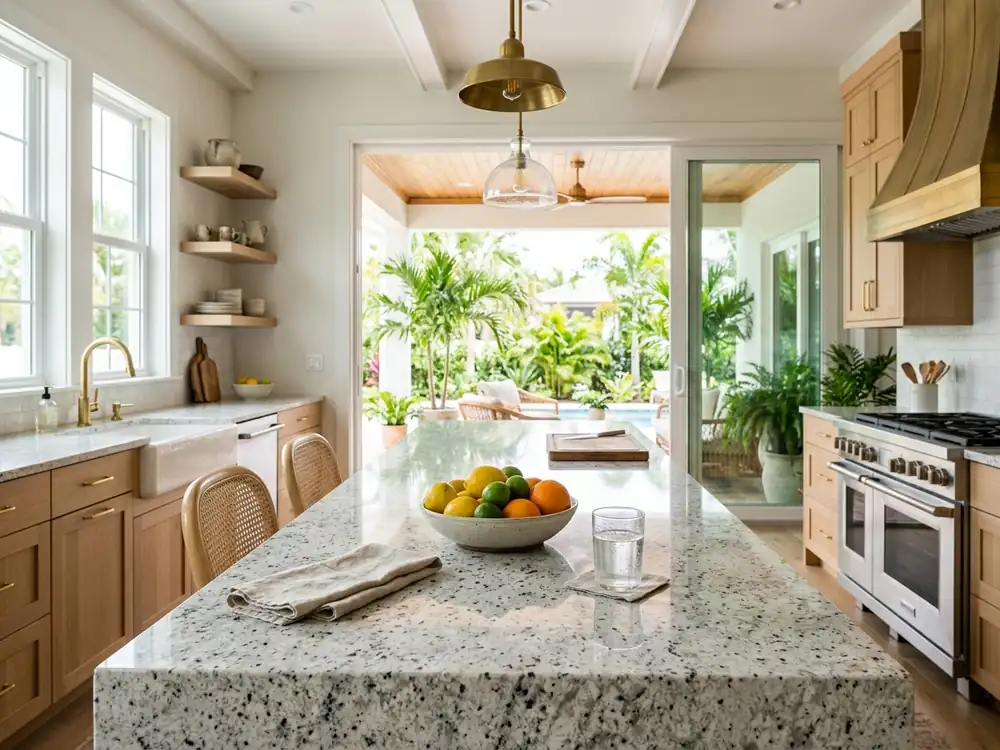
If you’ve just signed off on a slab of Ubatuba or Colonial White for your Florida kitchen, somebody has probably already told you that granite is high-maintenance and needs sealing “all the time.” Here’s the EdStone honest take: that advice is half-right and half-myth, and in our humid, sun-soaked corner of the country the details actually matter. Knowing exactly how often to seal granite countertops in Florida, how to test whether yours even needs it, and how to do it right can save you money, protect your investment, and keep your kitchen looking showroom-fresh for decades.
We fabricate and install granite, quartz, quartzite, marble, and porcelain every week for homeowners from Jacksonville down to Naples, and the sealing question comes up in nearly every consultation. So let’s clear the fog. This is the practical, no-hype guide to whether your granite really needs sealing, how to run the famous water test, and how to seal it yourself if it does.
Why Granite Is Porous and What Sealing Actually Does
Granite is a natural stone. It was formed deep underground from cooling magma, which means it’s a mosaic of interlocking mineral crystals: quartz, feldspar, mica, and others. Those crystals don’t fuse into a perfectly solid sheet. Between and within them are microscopic pores and capillary channels. That’s what makes granite porous, and it’s also why granite is genuinely natural and not a manufactured product.
Porosity is a spectrum, not a yes-or-no switch. Some granites are dense and tight; others drink liquid like a sponge. When a porous granite gets exposed to an oily salad dressing, red wine, or a puddle of coffee that sits overnight, the liquid can wick down into those pores and leave a dark stain that’s stubborn to remove. The good news that often gets lost in the sealing conversation: granite is genuinely heat-resistant. You can set a hot pot straight from the burner onto granite without scorching it, which is one reason it remains a favorite for serious Florida cooks. Sealing is about staining, not heat. The two issues are completely separate.
A sealer is an insurance policy against staining. Here’s what it does and, just as importantly, what it doesn’t do:
- What sealing does: A quality impregnating sealer soaks into the top layer of stone and coats the walls of those pores with a water- and oil-repellent barrier. It buys you time. Instead of a spill absorbing instantly, it beads or sits on the surface long enough for you to wipe it up before it stains.
- What sealing does not do: It does not make granite bulletproof. It won’t stop etching from harsh acids on certain stones, it won’t prevent chips or cracks, and it won’t make a spill disappear if you leave it sitting for two days. Sealer reduces absorption; it doesn’t eliminate the laws of physics.
- What sealing is not: It’s not a shiny coating you can see. A proper penetrating sealer is invisible. The gloss on your granite comes from the factory polish, not from sealer. If a “sealer” leaves a visible film, it’s a topical product, and that’s usually the wrong choice for kitchen granite.
- What sealing is not a substitute for: Daily wiping. Even perfectly sealed stone will eventually stain if a puddle of olive oil or red wine is left to sit for a full day. Sealer extends your reaction window; it doesn’t excuse you from cleaning up.
The Myth That Every Granite Needs Constant Sealing
This is the big one. Walk into any big-box store and you’ll be told to seal your granite every few months, ideally with the bottle they’re selling. The reality is more nuanced, and honestly, more in your favor.
Granite density varies enormously by color and origin. Many dark granites, especially the blacks like Absolute Black, Black Galaxy, and many Brazilian blacks, are so dense they barely absorb anything at all. We’ve tested jet-black slabs that wouldn’t take a drop of water if you left it sitting for an hour. Sealing those is often pointless, and some manufacturers explicitly say not to bother.
On the other end, lighter and more crystalline granites, white and cream tones with lots of feldspar, or coarse-grained exotic slabs, tend to be thirstier. Those are the ones that genuinely benefit from regular sealing. The pattern matters too: tightly packed, fine-grained stones generally resist absorption better than open, coarse, sparkly slabs where the crystals leave more room between them.
- Dense, low-absorption granites: Most blacks, many dark greens and browns. May need sealing rarely, or never.
- Medium-absorption granites: The vast majority of mid-tone speckled granites. Typically seal every 1 to 3 years.
- High-absorption granites: Many whites, creams, and coarse exotics. May need sealing annually, sometimes more often near the sink.
The takeaway: don’t guess, and don’t blindly follow a calendar. Test your specific slab. Which brings us to the part everyone actually wants to know.
The Water Test and Lemon-Juice Test: How to Read Your Granite
You don’t need a lab. You need water, a few minutes, and maybe a lemon. These two tests tell you exactly whether your granite needs sealing and how urgently.
The Water Test, Step by Step
- Pick a clean, dry spot, ideally near the sink or behind the cooktop where the stone works hardest.
- Pour about a tablespoon of water into a small puddle, roughly the size of a silver dollar, three to four inches across.
- Start a timer and watch. Check the spot at 5, 10, and 15 minutes.
- Wipe it away and look at the stone where the water sat.
Here’s how to read the results:
- Beads up, no change after 15 minutes: Your granite is well sealed or naturally dense. Leave it alone. No sealing needed right now.
- Darkens after 10 to 15 minutes: Moderate absorption. Your seal is wearing thin. Plan to reseal within the next few weeks. No emergency.
- Darkens within 5 minutes: Your granite is thirsty and unprotected. Seal it soon, and you’ll likely need at least two coats.
- Darkens almost immediately, within a minute or two: High porosity and no effective seal. This stone needs sealing now, and probably on an annual schedule going forward.
The dark spot, by the way, is just water temporarily in the pores. It will evaporate and disappear within an hour or so. It’s not damage; it’s a diagnostic. For the most useful reading, test a few different zones: the spot right beside the sink, the prep area in front of the cooktop, and a quiet corner of the perimeter. It’s common for the high-use zones to absorb faster than the rest of the counter, which tells you exactly where to focus your attention.
The Lemon-Juice Test for Etching
The water test checks absorption. The lemon-juice test checks for acid sensitivity, which is a different issue that sealer can’t fix. Put a few drops of fresh lemon juice on an inconspicuous spot, wait 10 minutes, then rinse and dry.
- No change: Your stone is acid-resistant, which is typical for true granite. Good.
- A dull, lighter spot appears: The surface etched. This is rare on real granite but common on marble and some “granites” that are actually marble or dolomite sold under a trade name. Etching is a chemical reaction with the calcium in the stone, and no sealer prevents it.
If your stone etches, you’re likely dealing with marble or a marble-like stone, which is soft and acid-sensitive by nature. That’s worth knowing before someone splashes lime juice during a Saturday-night margarita session on the lanai. It’s also why quartzite has become so popular for Florida kitchens: true quartzite is harder than granite and naturally etch-resistant, so it shrugs off the acids that would dull marble. Quartzite still has some porosity and benefits from sealing much like granite, but it won’t etch the way a marble look-alike will.
How Often to Seal Granite Countertops in Florida
Now the headline question, with a Florida-specific answer. When homeowners ask us how often to seal granite countertops, the standard industry guidance is to reseal granite every 1 to 3 years. That’s a fine starting point, but Florida living nudges the timeline, and where the granite lives in your home matters as much as the calendar.
Our climate is a real factor. With indoor humidity routinely sitting at 60 to 85 percent, and homes that bounce between air conditioning and open lanai doors, stone surfaces deal with more ambient moisture than they would in Denver or Phoenix. Add year-round cooking, summer entertaining, and the sheer volume of use a Florida kitchen sees, and seals wear faster in the high-traffic zones. Coastal homeowners from Naples to the Atlantic side have an extra variable, too: salt-laden air is mildly corrosive and accelerates the breakdown of any protective treatment, especially on screened porches and outdoor counters.
- Around the sink and faucet: Constant water, soap, and wiping strip sealer fastest. This zone may need attention every 12 months even if the rest of the counter is fine.
- Behind the cooktop and prep areas: Oil, acids, and heavy use. Expect a 1 to 2 year cycle.
- Perimeter and low-use counters: Often 2 to 3 years, sometimes longer on dense stone.
- Bathroom countertops: Lower food risk but high humidity, especially in a master bath with a steamy shower. Watch for water marks; 2 to 3 years is typical.
- Outdoor kitchens and lanai counters: The harshest case. Sun, rain, salt air on the coast, and temperature swings break down sealer faster. Plan on every 6 to 12 months, and read the section below before you put granite outside at all.
The smartest approach isn’t a rigid schedule. It’s a quick water test once or twice a year, especially in the sink zone. Let the stone tell you when it’s time. A 90-second test beats guessing every time. If you want a simple rule of thumb to anchor the habit, many Florida homeowners test every spring before the busy entertaining and hurricane seasons and reseal whatever zones fail.
Step-by-Step: How to Seal Granite Yourself
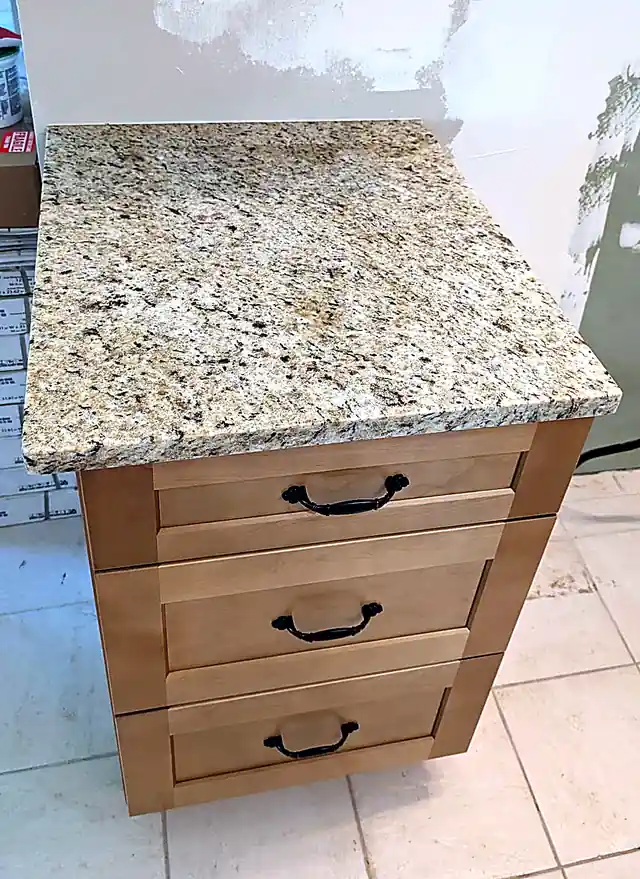
Sealing granite is genuinely a DIY-friendly job if you’re handy and patient. The two biggest mistakes people make are rushing the dry time and using a topical product. Avoid both and you’ll do fine. Here’s the full process.
What You’ll Need
- A quality impregnating (penetrating) sealer: Look for a fluoropolymer or silane/siloxane-based product labeled food-safe and safe for food-prep surfaces. Brands like Dry-Treat, Aqua Mix, or Tenax are widely used by pros.
- Clean, lint-free microfiber cloths: Several of them.
- A pH-neutral stone cleaner or just warm water and a soft cloth. No vinegar, no bleach, no ammonia, no acidic kitchen sprays.
- Gloves and good ventilation, especially for solvent-based sealers.
The Process
- Clean the surface thoroughly. Remove everything from the counter and clean with a pH-neutral cleaner. Any grease, soap film, or grime will block the sealer from penetrating. Get it spotless.
- Let it dry completely. This is where Florida humidity bites. Stone must be bone-dry before sealing, and in an 80 percent humidity kitchen that can take longer than the bottle suggests. Run the AC, give it several hours, ideally overnight. Sealing damp stone traps moisture and the sealer won’t bond.
- Apply the sealer evenly. Pour or spray a thin, even coat over a manageable section, a few square feet at a time. Spread it with a cloth so the whole surface is wet but not flooded.
- Let it dwell. Allow the sealer to soak in for the time on the label, usually 5 to 15 minutes. The stone is drinking the sealer into its pores during this window. On thirsty granite you’ll see it absorb visibly; reapply to any spots that dry out so they stay wet for the full dwell time.
- Buff off all the excess. Before the sealer dries on the surface, wipe the entire area completely dry with clean cloths. This step is critical. Any sealer left to dry on top will leave a hazy film. Buff until the surface is clear and dry to the touch.
- Apply a second coat if needed. Thirsty stone usually wants two coats. Wait the label’s recommended interval, often 30 minutes to an hour, then repeat steps 3 through 5.
- Let it cure. The sealer needs time to fully bond, typically 24 to 48 hours. Avoid water and spills during the cure. In high humidity, lean toward the longer end and keep the AC running.
When you’re done, run a water test the next day to confirm the seal took. Water should bead and the stone should resist darkening. If part of it still drinks fast, hit that area again.
Signs Your Granite Needs Resealing
Beyond the formal water test, your countertop gives you everyday clues. Learn to spot them and you’ll never let your stone go unprotected for long.
- Dark water marks that linger: If a glass leaves a dark ring or a wiped-up spill leaves a temporary dark patch, water is getting into the pores. Time to reseal.
- Spills stain faster than they used to: If coffee or oil that you would have wiped up with no trace now leaves a faint shadow, the seal is gone.
- Water stops beading: Fresh sealer makes droplets bead up. When water spreads flat and soaks in, the protection has worn off.
- The surface looks duller or “thirsty” near the sink: High-use zones wear first. A patchy look around the faucet is a classic tell.
- It’s simply been a few years: If you can’t remember the last time you sealed and you’re on a thirstier stone, just test it.
Penetrating vs Topical Sealers, and Food-Safe Products
Not all sealers are the same, and choosing the wrong type is the most common DIY mistake we see.
Penetrating / Impregnating Sealers
These soak into the stone and protect from within. They’re invisible, breathable, and long-lasting, which is exactly what you want on kitchen granite. They let the stone release any internal moisture, which matters in humid Florida where trapping moisture under a coating can cause problems. This is the right category for nearly every interior countertop.
Topical Sealers
These form a film on the surface, like a wax or acrylic coating. They can add shine but they scratch, wear unevenly, can cloud, and need stripping and reapplication. They also don’t let the stone breathe. For kitchen counters, skip them. They make more sense on certain decorative or low-traffic stone, not on a hardworking food-prep surface.
Food-Safe Matters
Your countertop touches food, so use a sealer specifically labeled safe for food-prep surfaces. Most reputable impregnating sealers are food-safe once fully cured, but check the label and respect the full cure time before you go back to chopping vegetables on that spot. If you’ve gone the maintenance-free route elsewhere in the kitchen, our guide on how to clean quartz countertops in Florida homes covers the no-sealing alternative, since engineered quartz is non-porous and never needs sealing at all.
DIY vs Hiring a Pro, and the Outdoor Granite Question
Sealing your own granite is one of the more approachable home projects. For a standard kitchen with a forgiving stone, a careful homeowner can absolutely handle it in an afternoon. That said, there are good reasons to call a pro.
- Consider DIY when: You have a mid-tone granite, a standard layout, a free afternoon, and you’re comfortable following directions precisely. The product cost is modest, often $20 to $60 for a bottle that seals a whole kitchen.
- Consider a pro when: You have an expensive exotic or very thirsty white stone, a large or complex layout, you’re seeing stains you can’t lift, or you simply want a long-warranty professional-grade sealer applied perfectly. Pros also use premium 10- to 15-year sealers that aren’t sold at retail.
Florida Humidity and Dry Time
We’ll say it again because it’s the number-one reason DIY sealing jobs fail here: humidity extends dry time. The stone must be fully dry before you seal and the sealer must be allowed to cure without interference. In a 75 to 85 percent humidity environment, run the air conditioning, use a dehumidifier if you have one, and add a buffer to every dry-time and cure window on the label. Patience is the cheapest tool in the kit.
Outdoor Granite and Lanai Counters
Here’s an honest word about putting granite outside, which plenty of Florida homeowners want to do for the lanai or outdoor kitchen. Granite itself is very heat-resistant and durable, which is great. But outdoors it faces UV, rain, and on the coast, salt air, and sealer breaks down faster in all of that. If you go with outdoor granite, plan to reseal every 6 to 12 months and accept that lighter stones may fade or show wear over years of direct Florida sun.
For a true outdoor kitchen, we usually steer homeowners toward porcelain or sintered stone instead. It’s engineered to be UV-stable, heat-proof, and scratch-resistant, and it never needs sealing, which makes it the standout choice for Florida’s indoor-outdoor lifestyle. One thing to never put outdoors: engineered quartz. Its resin binder yellows under sustained UV and can scorch near 300 degrees, so it belongs strictly indoors. Granite outdoors is doable with maintenance; quartz outdoors is a mistake. If you’re weighing materials and budgets across the whole project, our breakdown of countertop costs in Florida for 2026 lays out price-per-square-foot ranges for each stone.
Why Granite Thrives in Florida Homes
In a state where the sun is intense, the air is heavy with moisture, and life often blurs the line between indoors and out, countertop materials are put to the ultimate test. This is where granite’s natural origins give it a powerful advantage. Forged deep within the earth’s crust under immense heat and pressure, granite is a testament to geological strength. This inherent toughness makes it uniquely suited for the Sunshine State.
Built to Beat the Heat and Humidity
Florida’s climate can be tough on building materials. The constant humidity can cause warping in lesser materials, and the dramatic temperature shifts during a summer thunderstorm can stress surfaces. Granite, however, is unfazed. Its dense, crystalline structure is naturally resistant to moisture, meaning it won’t swell, warp, or degrade in our perpetually humid environment.
Furthermore, its formation process makes it exceptionally heat-resistant. You can place a hot pan directly on your granite countertop without a trivet and have no fear of scorching, blistering, or leaving a permanent mark. This is a level of convenience that other materials, particularly many engineered quartz products, simply cannot offer. This heat tolerance is especially valuable in Florida, where grilling and outdoor cooking are year-round activities. Granite is a premier choice for outdoor kitchens, standing up to the blazing sun and hot grill tools without breaking a sweat.
Scratch Resistance for Real-Life Kitchens
A kitchen is a workspace, and countertops are the primary stage. From chopping vegetables to sliding small appliances, the surface endures constant contact. Granite is one of the hardest natural stones available, rating a 6 to 7 on the Mohs hardness scale. In practical terms, this means it’s incredibly difficult to scratch. Most knife blades, pots, pans, and ceramics are no match for its durable surface. While we always recommend using a cutting board, an accidental slip of the knife is unlikely to cause any damage. This durability ensures your countertops look pristine and unblemished for years, even in the busiest of family kitchens.
The Enduring Appeal in Coastal Design
While quartz has gained popularity, granite remains a cornerstone of Florida coastal and luxury home design. Its natural, organic patterns, from subtle, flowing veins to bold, speckled constellations, offer a one-of-a-kind artistry that engineered materials can only imitate. Each slab is a unique piece of the earth, adding a layer of authenticity and character to a home. In coastal designs that emphasize natural textures and elements, granite feels right at home, complementing everything from light, sandy-hued cabinetry to deep, ocean-blue accents. Its ability to blend natural beauty with rugged performance is why it continues to be a top choice for discerning Florida homeowners.
Real-World Care & Cleaning for Florida Granite
Long-term beauty isn’t about intensive labor; it’s about consistent, gentle habits. The best granite countertop maintenance routine is the simplest one. Aggressive cleaning is not only unnecessary, it’s counterproductive, as it can wear down your sealer faster.
Your Simple Weekly Routine
For 99% of messes, all you need is a soft cloth (microfiber is perfect) and a simple cleaning solution.
- Daily Wipe-Down: After cooking or meal prep, simply wipe down the counters with a damp cloth and a small amount of pH-neutral dish soap (like Dawn). Rinse with a clean, damp cloth to remove any soap residue.
- Towel Dry: To prevent water spots and keep the granite gleaming, give it a quick final wipe with a dry microfiber towel. This simple step enhances the stone’s natural shine.
- Spill Management: The golden rule is to wipe up spills as they happen. Your sealer provides a window of protection, but it’s not a force field. Acidic substances like wine, lemon juice, vinegar, and tomato sauce should be wiped up promptly to prevent any chance of etching the stone’s surface.
Florida-Specific Considerations
- Outdoor Kitchens: Granite in an outdoor kitchen is exposed to rain, salt air, and intense UV rays. While the stone itself is durable, the sealer will likely break down faster. Plan to perform the water test on your outdoor countertops every six months and expect to reseal them more frequently, perhaps every 1-2 years, to keep them protected from the elements.
- Salt-Air Exposure: For homes directly on the coast, the salty air can leave a fine, abrasive film on surfaces. A regular wipe-down with fresh water is important to prevent this buildup from dulling the finish over time.
Polishing Tips and Common Myths to Avoid
Keeping that showroom shine is easy if you avoid common pitfalls.
Do:
- Use a dedicated granite polishing product once every few months if you want to boost the shine. These products are formulated to enhance the luster without damaging the seal.
- Buff with a clean, dry microfiber cloth to achieve a streak-free finish.
Don’t:
- ❌ Never use acidic or abrasive cleaners. This includes vinegar, lemon juice, bleach, ammonia, and common scouring powders. These will strip your sealer and can dull or etch the stone itself.
- ❌ Avoid using generic multi-surface cleaners. Many contain harsh chemicals that are not safe for natural stone. Stick to pH-neutral options.
- ❌ Don’t use steel wool or abrasive scrubbing pads. These can create micro-scratches that will mar the finish over time.
- ❌ Never use olive oil or other cooking oils to make it shine. This is a pervasive myth that will only result in a greasy, sticky film that attracts dust and grime. It doesn’t polish the stone; it just makes a mess.
Frequently Asked Questions
How often should I seal granite countertops in Florida?
Most Florida granite does well on a 1 to 3 year cycle, but the sink and prep zones often need attention every 12 months, and outdoor granite may need resealing every 6 to 12 months. Rather than following a fixed calendar, run a quick water test once or twice a year and reseal when the stone starts absorbing.
Does all granite need to be sealed?
No. Dense, low-absorption granites, especially many blacks like Absolute Black, may barely absorb water and rarely or never need sealing. Lighter, more porous whites and exotics need it more often. The water test tells you what your specific slab requires.
How do I know if my granite is already sealed?
Do the water test. Pour a small puddle and watch for 15 minutes. If it beads and the stone doesn’t darken, it’s sealed or naturally dense. If it darkens, especially within 5 minutes, it needs sealing.
Can I over-seal my granite?
Sort of. Penetrating sealer only absorbs as much as the stone can hold, so extra sealer on dense stone just sits on top. If you don’t buff off the excess before it dries, you’ll get a hazy film. The fix is to apply only what the stone absorbs and always wipe the surface clean and dry.
Is sealer food-safe?
Reputable impregnating sealers labeled for food-prep surfaces are food-safe once fully cured. Always check the label and respect the full 24 to 48 hour cure time before preparing food directly on the sealed surface.
What’s the difference between sealing and polishing?
They’re unrelated. Sealing protects against staining by filling the pores; it’s invisible and adds no shine. Polishing is a mechanical process that creates the glossy finish at the factory. A good penetrating sealer does not change how shiny your granite looks.
Do quartz countertops need sealing too?
No. Engineered quartz is about 90 percent ground quartz bound with resin, which makes it non-porous. It never needs sealing. Just keep it out of direct sun and away from sustained high heat, since the resin can yellow under UV and scorch near 300 degrees.
See It for Yourself at the EdStone Showroom
The best way to settle the question of how often to seal granite countertops in your own home is to see and touch real slabs. At the EdStone showroom, you can run your hand across dense blacks, thirsty whites, etch-resistant quartzites, and UV-proof porcelain, and we’ll show you exactly how each one handles a water test before it ever lands in your kitchen. We template, fabricate, and install every job ourselves, so the advice you get about sealing and maintenance comes from the same people cutting your stone.
Bring your kitchen or bathroom plans, or even a phone photo of the space, and we’ll help you choose a stone that fits your Florida lifestyle, your budget, and how much maintenance you actually want to do. Whether you want low-fuss quartz indoors, a stunning granite that you’ll seal once every couple of years, or bulletproof porcelain for the lanai, we’ll walk you through it honestly. Stop by the showroom or request your Florida countertop quote today, and let’s get your project started.