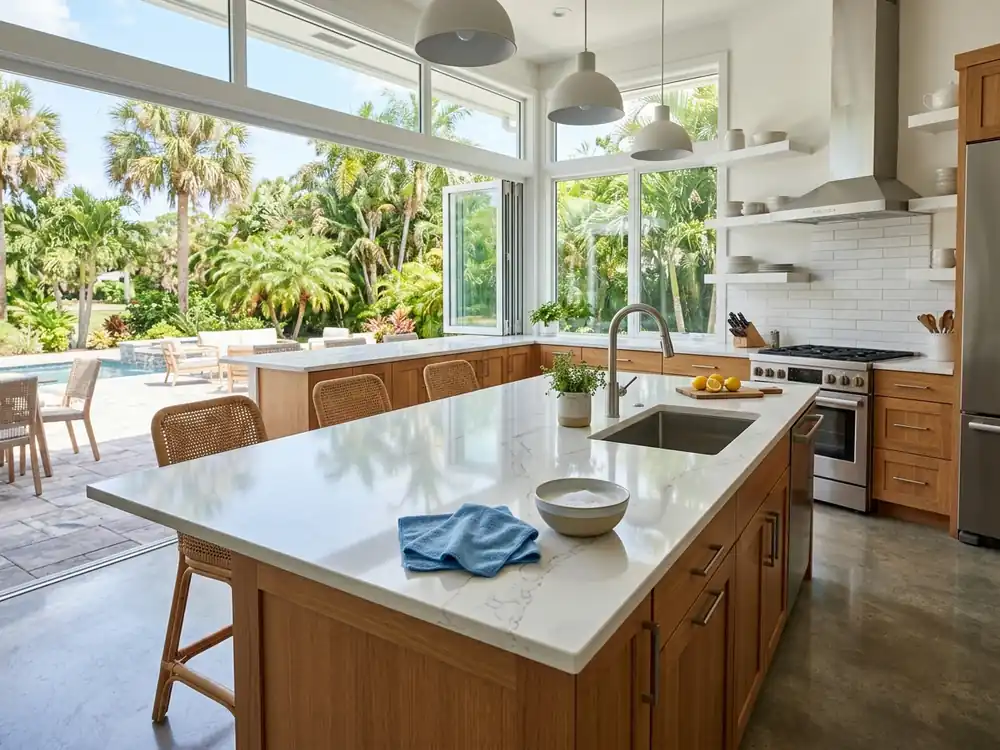
Picture this: it’s a sticky August afternoon in Sarasota, the AC is humming against 85% humidity, and you just pulled a sweating pitcher of sweet tea off the counter to find a faint ring left behind. If you’ve got engineered quartz, that ring wipes away in two seconds flat. Quartz has earned its reputation as the lowest-maintenance countertop you can buy for a Florida home, but “low maintenance” doesn’t mean “no rules.” Knowing exactly how to clean quartz countertops the right way is what keeps that factory-fresh finish looking showroom-new for the next 20 years instead of dulling, scorching, or yellowing before its time.
At EdStone, we template, fabricate, and install quartz in kitchens and bathrooms all over Florida, from Tampa condos to Naples beach houses. So we hear the same questions every week: Can I use this cleaner? Will a hot pan ruin it? Why is there a cloudy film by my sink? This is the EdStone honest guide to caring for quartz, written for the realities of living in a hot, humid, salt-air state. No fluff, no fear-mongering, just what actually works.
Why Quartz Is So Easy to Live With in Florida
Engineered quartz is roughly 90% ground natural quartz bound together with about 10% polymer resins and pigments. That manufacturing process is the secret to its low-maintenance personality. Because the resin fills every microscopic gap, the finished slab is completely non-porous, which changes everything about how you care for it.
- It never needs sealing: Unlike natural granite, which should be resealed roughly once a year, quartz seals nothing because there’s nothing to seal. The surface simply can’t absorb liquid. That saves you a sealing kit ($15-$40) and an afternoon of work every single year for the life of the counter.
- It resists stains by default: Coffee, wine, and tomato sauce sit on top of the surface instead of soaking in. You have minutes, not seconds, to wipe up a spill before it becomes a problem.
- It shrugs off Florida humidity: In a state where indoor humidity routinely runs 60-85%, a porous surface can wick moisture and harbor bacteria in its pores. Non-porous quartz doesn’t, which is why it’s a favorite for both kitchens and steamy bathrooms.
- It stays hygienic: With no pores for bacteria or mold to settle into, quartz is one of the most sanitary surfaces you can put in a home, an underrated perk during muggy Gulf Coast summers.
The flip side of all that engineering is the resin. It’s what makes quartz beautiful and stain-proof, but it’s also the part you have to respect. Resin doesn’t love high heat and it doesn’t love sustained UV. Keep those two enemies in check and quartz will reward you with decades of effortless service.
How to Clean Quartz Countertops: The Daily Routine
Here’s the good news that makes everyone smile in our showroom: once you learn how to clean quartz countertops the right way, daily care is almost embarrassingly simple. You do not need specialty stone cleaners, and you certainly don’t need anything harsh. The gold-standard daily method costs about a dollar a bottle.
The Everyday Wipe-Down
- Squirt a few drops of mild dish soap (Dawn, Palmolive, anything gentle) into a bowl of warm water.
- Dampen a soft microfiber or cotton cloth in the solution and wring it out so it’s damp, not dripping.
- Wipe the entire surface, working in sections and lifting crumbs and spills as you go.
- Follow with a clean, damp cloth to rinse away any soap residue, which can leave a dull film if left to dry.
- Buff dry with a fresh microfiber towel to a streak-free shine. This last step matters more than people think, especially with Florida’s hard water.
That’s it. Do this once a day or after each big cooking session and your quartz will stay gorgeous. For most everyday messes, warm soapy water genuinely is all you need. If you prefer a spray, a quality non-abrasive surface cleaner labeled safe for quartz or stone is fine, just steer clear of the off-limits ingredients we’ll cover below.
Tackling Dried-On Gunk
Life happens. Pancake batter dries, jam crusts over, candle wax drips. For anything stuck to the surface, resist the urge to grab a knife or a scouring pad. Instead:
- Soften it first: Lay a warm, wet cloth over the spot for a few minutes to loosen it.
- Scrape gently: Use a plastic putty knife or an old credit card held at a low angle. Plastic won’t scratch the polish the way metal can.
- Finish with soapy water: Wipe the residue away and buff dry.
The Weekly Clean and Florida’s Hard-Water Problem
Knowing how to clean quartz countertops day to day covers most situations, but a deeper weekly clean keeps the slab looking its best. In Florida there’s one specific villain you’ll meet over and over during that weekly pass: hard water. Much of the state, from Tampa to Cape Coral, pulls water from limestone aquifers loaded with calcium and magnesium. When that water dries on your counter, especially around the faucet and sink, it leaves chalky white spots, cloudy film, and limescale.
Your Weekly Method
- Start with the daily soapy-water wipe to clear surface grime.
- Hit the high-traffic zones: Pay extra attention to the area around the cooktop, the sink, and wherever you prep food.
- Always dry the surface: The single best defense against hard-water spots is buffing the counter dry after every clean. Standing water is what creates the deposits in the first place.
Beating Hard-Water Spots and Film
If deposits have already built up, you have a few safe options. The key is to avoid the harsh acids people instinctively reach for.
- Glass cleaner: A non-abrasive, ammonia-light glass cleaner sprayed on and buffed off can dissolve light film and restore shine. Use it occasionally, not daily.
- Specialty quartz polish: Products formulated specifically for engineered stone tackle film without risk and leave a protective sheen.
- A soft cloth and patience: For stubborn limescale, dampen the area, let it sit, and gently work it with a non-scratch sponge (the soft white side, never the abrasive side).
The long-term fix many Florida homeowners land on is a whole-home water softener (typically $1,000-$3,000 installed). It won’t just protect your countertops, it protects your faucets, glass shower doors, and appliances too. But it’s optional. Diligent drying does most of the job.
What You Must Never Use on Quartz
This is the section that saves countertops. Quartz is tough, but the polished resin finish can be permanently damaged by the wrong chemicals or tools. Burn one of these into your memory and you’ll avoid the heartbreak we occasionally see when a homeowner means well with the wrong product.
- Regular bleach: Straight or strong chlorine bleach can discolor and dull quartz, especially lighter colors. It breaks down the resin over time and can leave permanent pale spots.
- Abrasive pads, powders, and creams: Steel wool, green scouring pads, Comet, Soft Scrub with grit, baking-soda scrubbing, all of these scratch and dull the polished surface. Once the shine is abraded away, it doesn’t come back without professional refinishing.
- Acidic cleaners: Vinegar, lemon, CLR, Lime-A-Way, and bathroom descalers are too aggressive for routine use and can etch or degrade the resin. (More on the vinegar nuance below.)
- High-alkaline cleaners: Heavy-duty degreasers with a high pH, oven cleaner, and concentrated ammonia can break down the binding resin and cause discoloration.
- Oven cleaner and drain cleaner: These are among the most caustic products in your home. Even a splash can permanently damage quartz. Keep them far from the counter.
- Paint thinner, nail polish remover with acetone (for general cleaning), turpentine, and harsh solvents: Fine for targeted, brief stain removal in tiny amounts, but never as a general cleaner. Always rinse thoroughly afterward.
- Permanent markers and dyes left to sit: Not a cleaner, but worth flagging, wipe these up fast.
The Magic Eraser and Vinegar Cautions
Two popular products deserve a special note because the internet gives bad advice about both.
- Magic Eraser (melamine foam): It feels soft, but it works by being a very fine abrasive, essentially ultra-fine sandpaper. On a polished quartz finish, repeated use can dull the sheen and create a cloudy patch over time. Use it sparingly and only as a last resort, never as your go-to.
- Vinegar: Diluted vinegar gets recommended everywhere for hard water, and a heavily diluted, quickly-rinsed application won’t instantly ruin quartz. But because it’s acidic, regular use slowly degrades the resin and can dull the finish. We tell Florida clients to skip it and use a soap-and-water plus drying routine instead. The risk isn’t worth the convenience.
Step-by-Step Stain and Mess Removal
Even on stain-resistant quartz, certain substances need a targeted approach. Here’s how to handle the messes we get asked about most, ranked roughly from everyday to oh-no.
Dried Food
- Soften with a warm, damp cloth for 3-5 minutes.
- Scrape gently with a plastic putty knife or credit card edge.
- Wash with mild dish soap and warm water, then buff dry.
Grease and Cooking Oil
- Spray a degreasing dish soap solution (a little stronger on the soap) onto the spot.
- Let it dwell for a minute to cut the oil.
- Wipe with a soft cloth, rinse with clean water, and dry. For a film around the cooktop, a quartz-safe spray cleaner works well.
Coffee, Tea, and Red Wine
- Blot up the liquid immediately, don’t smear it.
- Clean with warm soapy water. Most of the time, that’s all it takes because quartz won’t absorb the stain.
- For a faint lingering tint, make a paste of a gentle, non-abrasive cleaner, apply, wait a few minutes, and wipe. Rinse and dry.
Ink and Permanent Marker
- Dampen a cloth with a small amount of rubbing alcohol (isopropyl).
- Gently rub the mark, working from the outside in.
- Rinse the area thoroughly with soapy water and dry. Alcohol is safe for quartz in this targeted, short-contact use.
Nail Polish
- Let it dry, then gently scrape with a plastic scraper.
- For residue, dab a tiny amount of non-acetone remover on a cloth and rub briefly.
- Rinse immediately and completely with soapy water, then dry. Never let acetone-based products sit on quartz.
Adhesives, Glue, and Gum
- Harden chewing gum with an ice cube in a bag, then scrape with plastic.
- For sticky adhesive residue, apply a small amount of a quartz-safe adhesive remover or a dab of rubbing alcohol.
- Work gently, then rinse with soapy water and dry.
Dried Caulk or Paint
- This happens during remodels, score the edge of the dried caulk gently with a plastic scraper.
- Lift it away, working flat against the surface to avoid gouging the polish.
- Remove any film with a touch of rubbing alcohol, then wash and dry. For dried latex paint, the same plastic-scrape-then-alcohol method works.
Hard-Water Spots and Limescale
- Lay a warm, damp cloth over the deposit to soften it.
- Work it gently with the soft side of a non-scratch sponge.
- For tougher buildup, use a dedicated quartz cleaner or a quick pass of glass cleaner, then buff dry. Avoid the temptation to reach for vinegar or CLR.
Heat: The One Thing That Can Ruin Quartz Fast
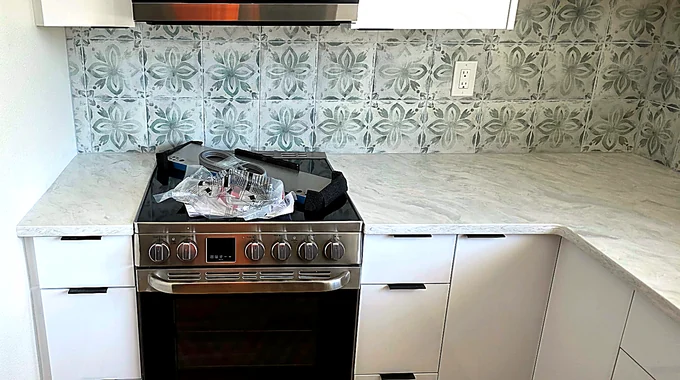
If there’s a single rule that matters most, it’s this one. The resin that makes quartz non-porous and stain-resistant is also its Achilles’ heel when it comes to heat. Quartz starts to risk scorching, discoloration, and even cracking from thermal shock at sustained temperatures around 300°F, and a pan straight off a Florida gas burner or out of a 400°F oven blows right past that.
- Always use trivets and hot pads: Never set a hot pot, pan, slow cooker, air fryer, or baking sheet directly on quartz. Make trivets a non-negotiable habit.
- Watch the small appliances: Toaster ovens, electric griddles, and Instant Pots throw off more sustained heat than you’d expect. Give them a heat-resistant pad or board.
- Mind the thermal shock: A burn mark is permanent, and a sudden temperature swing can crack a slab. There’s no DIY fix, scorched quartz usually means replacement.
This is one area where granite has the edge, it’s natural stone and far more heat-tolerant. If you want the full breakdown, we wrote a detailed piece on whether you can put hot pans on quartz and granite in Florida that’s worth a read before you finalize your kitchen layout.
Sun and UV: A Real Florida Concern
Florida gets some of the most intense UV exposure in the country, and that matters for quartz. The same resins that bind the slab can yellow or fade under sustained direct sunlight over months and years. This is exactly why engineered quartz is not recommended for outdoor kitchens or lanais, and why you should think carefully about indoor placement near big windows.
- Be mindful near large windows and sliders: Florida homes love walls of glass and pocketing lanai doors. A quartz island or counter that sits in direct, all-day sun can discolor unevenly over time, leaving the exposed area a different shade than the rest.
- Use window treatments or UV film: Solar shades, blinds, or low-E and UV-blocking window film dramatically reduce the risk and keep your kitchen cooler too.
- Never put quartz outdoors: For your lanai, summer kitchen, or pool-side bar, choose porcelain or sintered stone instead. It’s UV-stable, heat-proof, and scratch-resistant, purpose-built for Florida’s brutal outdoor conditions. Natural granite and quartzite also hold up well outside.
If you’re weighing materials for a room with serious sun exposure, our comparison of granite vs. quartz countertops for Florida homes walks through where each one shines and where it doesn’t.
Disinfecting Quartz Safely
After cutting raw chicken or during cold-and-flu season, you’ll want to sanitize, and you can do it without harming the finish. The trick is choosing the right disinfectant and contact time.
- Use isopropyl alcohol (70%): Mix equal parts rubbing alcohol and water in a spray bottle, mist the surface, let it sit for a couple of minutes, then wipe and rinse. This is the safest reliable disinfectant for quartz.
- Skip the bleach wipes: Many disinfecting wipes contain bleach or citric acid. Read labels, and avoid anything with chlorine bleach or strong acids on quartz.
- Rinse after disinfecting: Always follow with clean water and a dry buff so no chemical residue sits on the surface.
- Remember it’s already hygienic: Because quartz is non-porous, bacteria can’t burrow in. Routine soap-and-water cleaning handles most of the job, with alcohol for true sanitizing.
Why Quartz Never Needs Sealing (and What That Saves You)
One of the biggest practical reasons Florida homeowners choose quartz is what they don’t have to do. Let’s put a fine point on it by contrasting it with granite.
- Granite is porous and needs periodic sealing: Natural granite has microscopic pores that can absorb liquids and harbor bacteria if left unsealed. Most granite should be sealed at installation and resealed roughly once a year, more often in heavy-use kitchens. A simple water test (drops that soak in mean it’s time) tells you when.
- Quartz is non-porous and never needs sealing: The resin already fills every gap, so there’s nothing to seal, ever. No annual ritual, no sealing products, no guesswork.
- What you save: Over a 20-year lifespan, skipping annual sealing saves you roughly $300-$800 in products plus 20 afternoons of labor, and it removes the worry of forgetting and leaving the stone vulnerable during a humid Florida summer.
That doesn’t make granite a bad choice, far from it. Sealed granite is gorgeous, heat-tolerant, and perfect for many homes. It just means quartz wins on sheer convenience, which is exactly why it’s the busiest material in our showroom.
Frequently Asked Questions
Can I use Clorox or disinfecting wipes on my quartz countertops?
Skip anything with chlorine bleach. Regular bleach can discolor and dull quartz, especially lighter colors, and many wipes also contain citric acid that’s too harsh for routine use. To disinfect, use a 70% isopropyl alcohol solution (half alcohol, half water), let it dwell a couple of minutes, then rinse and dry.
Will a hot pan really damage quartz?
Yes, and it’s the most common way quartz gets ruined. The resin can scorch, discolor, or crack from thermal shock around 300°F, and pans off the stove or out of the oven run far hotter. Always use trivets and hot pads. A burn mark is permanent and usually means replacing the slab.
Is vinegar safe for cleaning quartz?
We don’t recommend it. Vinegar is acidic, and while a single heavily-diluted, quickly-rinsed application won’t instantly ruin quartz, regular use slowly degrades the resin and dulls the finish. Mild dish soap and warm water, followed by buffing dry, handles everyday cleaning and even most hard-water spots.
Why is there a cloudy film on my quartz near the sink?
That’s almost always hard-water buildup, extremely common across Florida’s limestone-fed water supply. Buff the counter dry after every use to prevent it, and remove existing film with a quartz-safe cleaner or a quick pass of non-abrasive glass cleaner. A whole-home water softener is the long-term fix if it’s persistent.
Does quartz ever need to be sealed like granite?
No, never. Quartz is non-porous because resin fills every gap, so there’s nothing for a sealer to penetrate. Granite, being natural and porous, should be resealed about once a year. The no-sealing convenience is one of the top reasons Florida homeowners choose quartz.
Can I put quartz countertops in my outdoor kitchen or lanai?
No. Engineered quartz yellows and fades under sustained UV, which Florida has in abundance, so it’s strictly an indoor material. For outdoor kitchens, lanais, and pool bars, choose porcelain or sintered stone, which is UV-stable, heat-proof, and scratch-resistant. Granite and quartzite also perform well outside.
How do I get a dried coffee or wine stain off quartz?
Because quartz is non-porous, these rarely leave a true stain. Wash with warm soapy water and most of it lifts right off. For any faint lingering tint, apply a gentle non-abrasive cleaner, let it sit a few minutes, wipe, then rinse and buff dry. Avoid abrasive pads, which dull the polish.
See It and Touch It at the EdStone Showroom
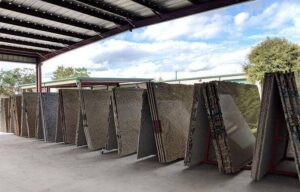
The best way to fall in love with quartz, and to understand exactly how it’ll live in your Florida kitchen or bath, is to see the slabs in person. At our EdStone showroom you can run your hand across dozens of quartz colors and finishes, compare them side by side with granite, quartzite, marble, and porcelain, and talk through the realities of your space, the sunny island by the lanai doors, the hard water at the coast, the way you actually cook.
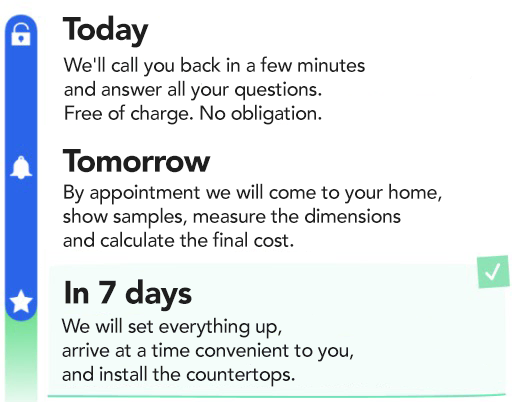
As a full-service Florida fabricator and installer, EdStone handles everything from digital templating to precision fabrication to clean, professional installation, with edge profiles and seams done right. Bring your kitchen plans, your cabinet door sample, or just your ideas, and our team will help you choose a material that looks stunning and fits how you live. Ready to get started? Visit the showroom or request your free countertop quote today, and let’s build a surface you’ll love wiping down for the next 20 years.