
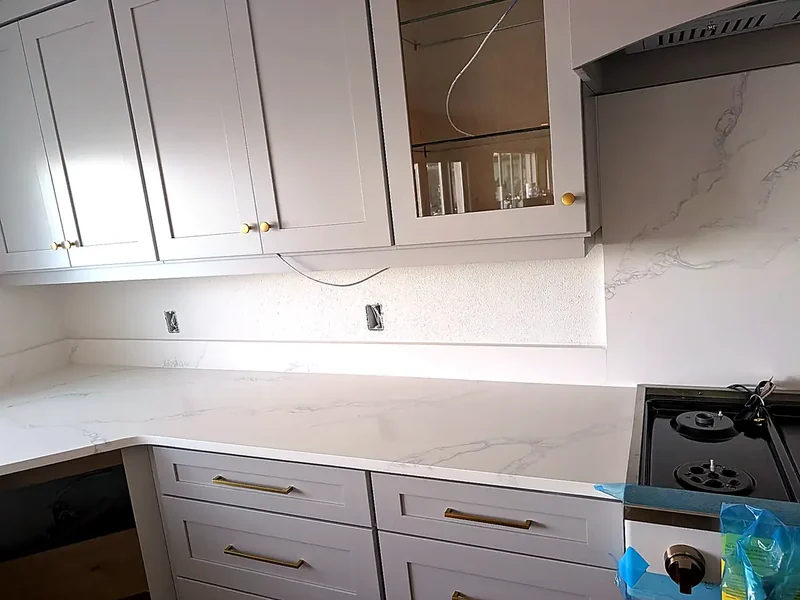
You have chosen the stone and decided the cabinets need a new finish. Now the painter wants to come first, the countertop installer wants the cabinets ready, and you are trying to work out which appointment makes sense.
The answer depends on what “doing the cabinets” means. Painting doors is different from refacing cabinet fronts. Rebuilding a sink base or moving a cabinet changes the countertop project itself. Put all three under one vague heading and the schedule becomes difficult to manage.
For an Orlando kitchen getting new granite or quartz, use this rule: settle the cabinet structure and dimensions before final templating, then coordinate finish work and protection around the stone installation. There is no single painting order that suits every method, crew or existing kitchen.
Define the cabinet work before choosing the order
Painting the existing cabinets
A paint-only project may retain the boxes, door positions and countertop footprint. Even then, the painter needs access to the frames and a plan for removing doors, preparing surfaces and protecting adjacent finishes. Ask whether the chosen process requires the kitchen to be unavailable.
Do not assume the cabinet boxes are ready simply because the project is described as cosmetic. The fabricator still needs to assess the support conditions. Finish work can improve appearance while leaving a loose cabinet, damaged sink base or unsuitable installation surface untouched.
Refacing with new doors, panels or trim
Refacing can change visible dimensions at end panels, fillers, appliance surrounds and decorative details. Those changes may affect the desired counter overhang or the way a finished edge lines up. Give the fabricator the complete refacing scope before measurements are finalized.
A new decorative panel applied after templating can make a previously approved edge projection look wrong. The important issue is whether the change affects geometry, rather than whether the cabinet contractor calls it a small detail.
Repairing or changing the cabinet layout
Replacing a sink base, moving an island or changing an appliance opening belongs in the preparation stage. The final countertop template should describe the cabinets that will actually support the stone. An old layout with a note saying “we will move this later” leaves too much unresolved.
Inspect first, paint second
Before investing in a new finish, have the cabinet structure assessed for the countertop you intend to install. Pay particular attention to known leaks, swollen materials and previous repairs. Open the cabinets and provide access to the areas the fabricator needs to inspect.
If repairs are required, identify who does them and when they will be ready for review. A freshly painted sink cabinet can still need structural correction. Completing that correction before the finish reduces the chance of paying to redo adjacent cosmetic work.
For the bigger keep-or-replace decision, see replacing countertops without replacing cabinets. Once the cabinets are suitable, the question becomes how to coordinate the surfaces and dimensions through the rest of the project.
Photograph the existing cabinet faces, corners and flooring before work begins. This creates a shared record of the starting condition and helps both trades plan protection. Record the agreed repairs separately so they are not confused with incidental finish touch-ups.
Freeze the dimensions that affect the stone
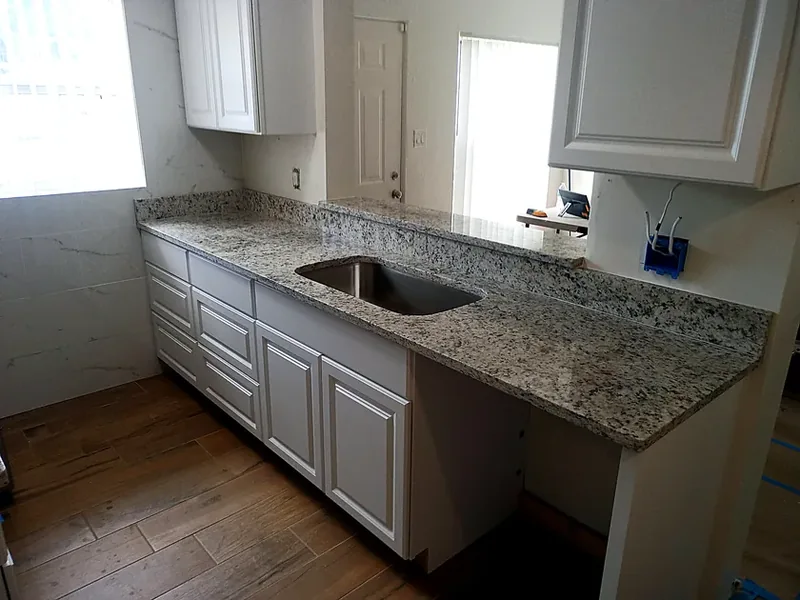
Make a drawing or written list of every cabinet change that reaches the countertop: end panels, fillers, raised bars, supports, appliance bays and any change to the island footprint. Review it with the cabinet contractor and fabricator before the final template appointment.
The sink deserves its own check. A different sink or apron-front arrangement can require cabinet work even when the rest of the kitchen stays put. Have that work completed or prepared to the fabricator’s stated requirements, with the exact sink information available.
If an end panel is not yet installed, the fabricator must decide whether a documented detail is sufficient for measurement or whether the appointment should wait. Do not make that decision on the crew’s behalf. What looks like a thin decorative layer can affect a carefully planned edge.
After approval, treat changes as revisions. Ask what a new panel, trim detail or cabinet position does to the template, fabrication and price. A measured kitchen should not continue changing silently while its countertop is being cut.
Two workable finish sequences
Most painting before stone, with planned final touch-ups
This can work when the painter can complete preparation and the main finish before the stone arrives, and when the finish has the time and conditions required by the coating system. The painter and installer should agree how surfaces will be protected during removal and installation.
The advantage is access: cabinet edges may be easier to prepare without the new countertop in the way. The tradeoff is exposure. A new finish will be close to demolition, stone handling and plumbing activity. Plan an assessment and any appropriate touch-up after those tasks.
Do not equate “dry to the touch” with ready for every kind of masking or protection. Ask the painter what products may contact the finish and when. A convenient roll of tape can damage work if it is incompatible with the coating or removed at the wrong stage.
Preparation before stone, final finish afterward
Another approach completes repairs and selected preparation before installation, then finishes the cabinets after the stone and essential trade work. This reduces exposure of the final coating to the heavy work, but requires careful protection of the new countertop and sink.
Ask the painter how sanding dust, spray, cleaners and masking will be managed around the new materials. Protection should suit the countertop manufacturer’s guidance and the installation condition. A newly bonded component should not become a convenient support for equipment or heavy coverings.
The right choice is the sequence both contractors can perform properly. Ask them to explain it together, including access, waiting periods, protection and responsibility for finishing the cabinet-to-counter edges.
Include the backsplash wall in the conversation
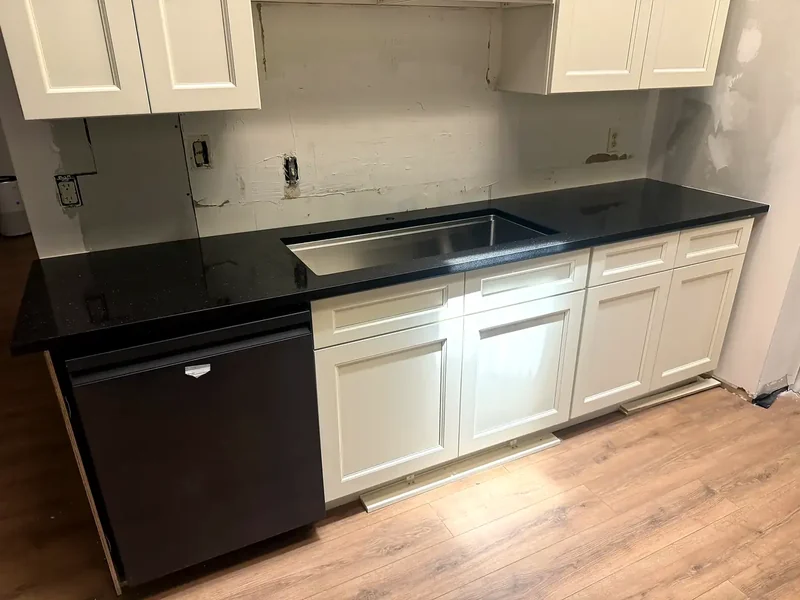
Removing a countertop or backsplash can disturb the wall behind it. If painting that wall is part of your refresh, schedule the final work around removal, repairs and the new backsplash detail. Painting a wall immediately before it is opened up creates avoidable repetition.
A change from a short backsplash to tile or full-height stone introduces another finish interface. Confirm where each material ends and which contractor completes the joint. The existing slab backsplash guide explains why the wall condition matters.
If the backsplash will follow later, tell the fabricator now. The countertop installation and faucet positions should account for the intended finished wall. A phased project works better when the later finish is documented rather than left as an unspecified possibility.
Coordinate flooring and appliance openings
A cabinet refresh often expands into new flooring or appliances. These changes can affect counter height, dishwasher clearance and the dimensions of the cooking area. Put them on the project list before the countertop appointments are fixed.
Follow the flooring manufacturer’s installation requirements and the project’s cabinet plan; there is no universal rule to run every flooring product beneath every cabinet. The trades need the proposed build-up and sequence so each can evaluate its own interface.
Have the appliance installer confirm finished openings and service access. A dishwasher should remain removable, and cabinet trim should not interfere with a range or its controls. Replacing doors can also change clearance around adjacent appliances, so test those interactions before completion.
Write down who owns the final details
Small unfinished tasks tend to sit between contracts. One contractor expects the painter to finish an exposed edge; another expects the cabinet contractor to replace a panel; the homeowner discovers neither item is in the proposal.
Create a short responsibility list covering cabinet repairs, removal and disposal, finish protection, backsplash-wall repairs, plumbing, final paint work and cleanup. Ask for a clear answer for each item. “We will work it out” is difficult to schedule and harder to compare between proposals.
Distinguish expected touch-ups from damage. Discuss how either will be identified, documented and addressed. This is easier before work than during a dispute over a chipped corner. Photographs and a simple agreed process help everyone discuss the same condition.
For the overall installation sequence, use Edstone’s installation walkthrough. Then add the cabinet and painting appointments that are specific to your kitchen.
A sample schedule based on milestones
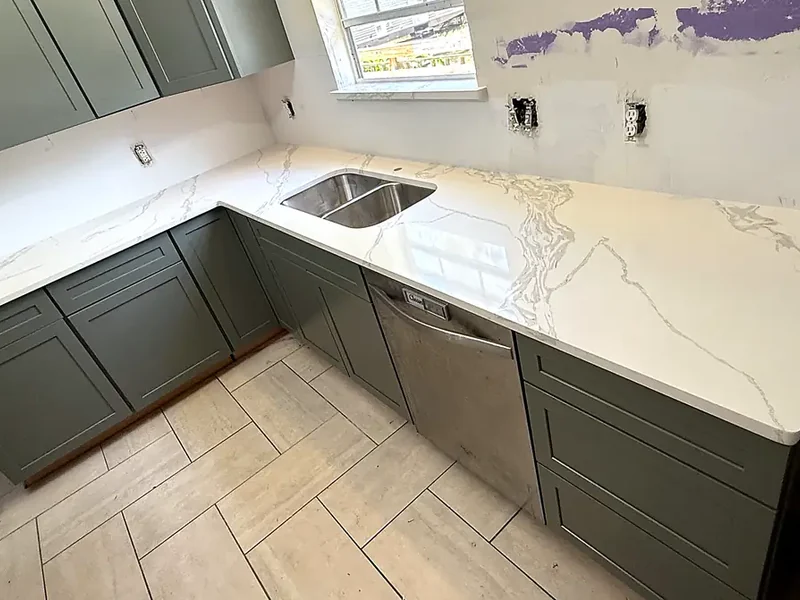
Rather than copying a seven-day schedule from another renovation, organize the work around readiness milestones. The time between them depends on materials, repairs, contractor availability and the chosen finishing system.
- Inspect and define: agree which cabinets stay, which repairs are needed and every dimension-changing detail.
- Prepare the structure: complete the cabinet work needed for reliable final measurements.
- Approve the counter: finalize the template, sink, appliance information, edge and relevant layout details.
- Perform the agreed finish phase: complete the pre-install painting work, if that is the selected sequence.
- Install and reconnect: fit the stone, observe installation instructions and complete the other trades’ work.
- Finish and inspect: complete remaining cabinet paint, wall work, hardware checks and cleanup.
Allow each trade to state when its work is ready for the next. If a milestone slips, update the dependent appointments. Stacking crews on top of one another rarely saves time when they need access to the same sink cabinet.
Questions homeowners ask
Can cabinet doors be painted away from the house?
Some painters use that process. Ask how the remaining frames will be prepared, how doors will be labeled and when they return. The countertop plan still needs the finished cabinet geometry and suitable access.
Should I choose the paint color before the stone?
Choose them together using physical samples where possible. Check the combination in your kitchen lighting. Color selection can happen early even if the final painting phase will take place after installation.
Can refacing happen after the new countertop?
Sometimes, but disclose the planned refacing before templating. The contractor and fabricator need to review panels, trim, overhangs and installation access so later work does not alter a detail the stone depends on.
What if I discover damaged cabinets during removal?
Pause the affected installation work and have the condition assessed. Confirm the repair and any schedule changes before continuing. Preserving a calendar date is a poor reason to place a new countertop over an unresolved support problem.
Review a real sample of the proposed cabinet finish
Ask the painter how the chosen coating and preparation will look on your cabinet material. A sample door or agreed test area can help establish the expected color, sheen and surface appearance before the main work starts. Review that sample with the actual countertop selection wherever practical.
Check it in the kitchen during daytime and under the lights you normally use in the evening. Approve the finish you have reviewed and retain the product and color information for later touch-ups. If the lighting is also changing, include that decision in the sample discussion.
Separate approval of the sample from approval of the work sequence. You can settle the desired finish early while the trades determine when it should be applied. That avoids delaying countertop planning simply because the final painting phase belongs later, and gives everyone a clear reference for the completed cabinet work.
Bring both scopes to the estimate
When you request an Edstone countertop consultation, include the cabinet painter’s or refacing contractor’s proposal, kitchen photos and planned appliance changes. Ask the trades to identify their dependencies before you reserve dates. A coordinated sequence protects the new stone, the cabinet finish and the time you have set aside for the work.