
Quick Answer: Is quartzite the right countertop for a Florida kitchen?
- What it is: Quartzite is a natural stone (formed from sandstone, up to 99% silicon dioxide), not the same as engineered quartz, which is roughly 90-93% crushed quartz bound with resin.
- Heat & durability: It handles a cast-iron pan straight off the burner and ranks ~7 on the Mohs scale (same as gemstones), so kitchen knives won’t scratch it; quartz can warp or discolor above 300°F.
- Cost: Quartzite runs $75-$200+ per sq ft installed; an average 45 sq ft Orlando kitchen in Taj Mahal lands between $4,500 and $6,500 complete.
- Maintenance: Unlike quartz, it needs a penetrating sealer about once every 12-18 months (some looser varieties twice a year), use the water-drop test and avoid acidic cleaners like vinegar or lemon.
- Best for Florida: Its UV resistance, heat tolerance, and humidity stability make it one of the best materials for outdoor kitchens, outperforming both granite and engineered quartz outdoors.
Walk into any Orlando kitchen showroom in 2026 and you will hear the same question at least three times a day: “Wait, is that marble or quartz?” And nine times out of ten, the salesperson smiles and answers: “Neither. It’s quartzite.”
If that sentence confused you, don’t feel bad. The countertop industry has spent two decades muddying the difference between quartz (a manufactured slab) and quartzite (a natural stone pulled from the earth). The two words sound nearly identical, but they behave very differently in a Florida kitchen. One scratches when you slide a ceramic bowl across it. The other laughs at a cast-iron pan full of hot pasta sauce.
In the last three years, quartzite has gone from a niche request to one of the fastest-growing material categories at our Edgewater shop. Homeowners who once insisted on Calacatta marble are quietly switching, and Florida kitchen designers are leading the charge. Here is why.
Quartzite vs. Quartz: The Naming Confusion That Costs Thousands
Let’s clear this up before anything else, because confusing the two is the single most expensive mistake a countertop shopper can make.
Quartz countertops are engineered. A factory combines roughly 90–93% crushed quartz crystals with polymer resins and pigments, then presses them into a slab. Brands like Cambria, Caesarstone, and Silestone all make quartz. It is man-made, consistent, and stain-resistant.
Quartzite countertops are natural. Quartzite begins life as sandstone. Over millions of years, heat and pressure deep in the earth fuse those sandstone grains into one of the hardest building stones on the planet. Each slab is unique, no two kitchens will ever look the same.
The practical difference matters:
- Quartz can warp or discolor from direct heat above 300°F. Quartzite can handle a cast-iron pan straight off the burner.
- Quartz never needs sealing. Quartzite usually needs a penetrating sealer once or twice a year.
- Quartz patterns repeat across a slab. Quartzite patterns are one-of-a-kind rivers of color.
- Quartz slabs average $50–$95 per square foot installed. Quartzite runs $75–$200+ depending on the variety.
If a salesperson uses the words interchangeably, walk out. They are not the same product, and the warranty implications are wildly different.
How Quartzite Is Formed (And Why It Matters for Florida)
Quartzite starts as ordinary beach sandstone. When tectonic plates shift and bury that sandstone miles underground, the quartz grains re-crystallize and bond together. The result is a stone made of up to 99% pure silicon dioxide, the same mineral that makes up the hardest sand on the beach.
That matters for Florida homeowners in three very specific ways:
- Heat tolerance. Quartzite was literally formed by heat. A hot sheet pan from the oven will not faze it. For an outdoor kitchen in Naples or a Lake Nona summer cook-in, that is a huge advantage.
- UV resistance. Because quartzite has no resin binders, direct Florida sunlight through big patio doors will not fade or yellow it the way it can affect some engineered surfaces.
- Humidity stability. A dense natural stone shrugs off the daily humidity swings that Florida homes experience between air conditioning and open windows.
The Most Popular Quartzite Varieties in 2026
Not all quartzite looks alike. Here are the slabs we move most often from our Orlando warehouse.
Taj Mahal
Soft ivory background with gentle beige and gold veining. If you loved the look of Calacatta marble but were warned off by the staining risk, Taj Mahal is the answer. It reads neutral enough to blend with white, grey, greige, or wood cabinets, and it photographs beautifully for Instagram-ready kitchens. Pricing: generally $85–$135 per square foot installed.
Sea Pearl / Perla Venata
A cool grey-green base with darker ribbons of movement. Sea Pearl is a favorite in coastal Florida homes. Naples, Sarasota, and Cocoa Beach builders love how it pulls the ocean indoors without becoming theme-park. It is denser than most quartzites, so it resists scratching extremely well. Pricing: typically $90–$140 per square foot installed.
White Macaubas
Arguably the most marble-mimicking quartzite on the market. Creamy white base with long, flowing grey veins. White Macaubas is the slab for homeowners who want drama, especially on waterfall islands where the veining can be book-matched around the corners. Pricing: $100–$180 per square foot installed, with premium slabs reaching higher.
Fantasy Brown
Warm brown, rust, and cream swirls. Not actually a true quartzite in the strictest sense (mineralogists call it a marble-quartzite hybrid), but it is sold under the quartzite banner and behaves similarly. It pairs especially well with dark wood cabinets and traditional Orlando ranch-style homes. Pricing: $75–$115 per square foot installed.
Quartzite Durability: The Real Test Results
On the Mohs hardness scale, quartzite ranks around 7, the same as most gemstones. For comparison:
- Marble: 3–4
- Granite: 6–7
- Engineered quartz: approximately 7
- Quartzite: 7
In plain English, that means a kitchen knife cannot scratch quartzite. A ceramic mug, a stainless-steel pot, and even most abrasive cleaners will roll off the surface without leaving a mark. The only everyday kitchen object that can damage quartzite is another chunk of quartzite or a diamond-blade tool.
Where it does lose to engineered quartz is porosity. Because quartzite is natural, it has tiny channels that can absorb liquids if left unsealed. Red wine and olive oil are the two usual culprits. This is solvable with a yearly sealer application, the same routine granite owners follow.
Does Quartzite Need Sealing in Humid Florida Climates?
Yes, but probably less often than the internet will tell you. Here is the honest answer.
Dense quartzites like Sea Pearl and Taj Mahal often only need sealing once every 12 to 18 months. Looser-grained varieties (some Fantasy Brown lots, for example) may need it twice a year.
The easiest test is the water droplet test:
- Place a few drops of water on a clean, dry section of countertop.
- Wait 15 minutes.
- Wipe it away. If the stone underneath looks darker than the surrounding area, it is time to seal.
Sealing takes about 20 minutes per kitchen. You wipe on a penetrating sealer, wait, and buff off the excess. In Florida’s humidity, we recommend doing it in air-conditioned conditions and letting the stone cure for 24 hours before heavy use.
Quartzite Pricing: What It Actually Costs in Florida in 2026
Installed pricing for quartzite in the Orlando, Tampa, and Jacksonville metros currently falls in these ranges:
- Entry-level quartzite (Fantasy Brown, Azul Macaubas): $75–$110 per sq ft
- Mid-tier quartzite (Taj Mahal, Super White): $95–$140 per sq ft
- Premium quartzite (White Macaubas, Cristallo, Mont Blanc): $140–$220 per sq ft
- Designer / exotic quartzite (Patagonia, Nacarado): $200+ per sq ft
Price drivers you should know about:
- Slab thickness: 3cm is the Florida standard and costs more than 2cm but needs no plywood substructure.
- Edge profile, a basic eased edge is included; mitered, ogee, or chiseled edges add $10–$30 per linear foot.
- Cutouts, sink cutouts, cooktop cutouts, and outlet holes each add labor.
- Book-matching, using two slabs side-by-side as mirror images (common on waterfall islands) adds material cost because you are buying two slabs instead of one.
For an average Orlando kitchen of 45 square feet, expect a Taj Mahal installation to land somewhere between $4,500 and $6,500 complete.
Common Mistakes Florida Homeowners Make With Quartzite
1. Assuming quartz and quartzite are the same thing. We covered this, but it deserves a second mention. Signed contracts have gone to court over this confusion.
2. Hand-picking a slab from a small photo. Quartzite patterns vary dramatically even within the same variety. Visit the slab yard and physically select your slab. At EdStone, we hold your specific slab once you choose it.
3. Skipping the sealer because “natural stone is high-maintenance.” Sealing quartzite takes less effort than mopping a floor. Skipping it is what causes the staining horror stories.
4. Using acidic cleaners. Lemon juice, vinegar, and many generic “stone cleaners” contain acids that can dull the surface over time. Stick with pH-neutral cleaners or plain soap and water.
5. Choosing a slab under the wrong light. Warehouse fluorescent lighting makes every stone look cooler and greyer. Request to see the slab under natural daylight or bring a sample of your cabinet finish with you.
Is Quartzite Right for Your Home? A Quick Decision Guide
Pick quartzite if:
- You love the look of marble but cook real meals (acids and heat would destroy marble).
- You want a surface where every slab is a one-of-a-kind piece of natural art.
- You are comfortable doing a 20-minute sealing job once a year.
- Your budget has room for $90–$160 per square foot installed.
- You plan to keep the home for 5+ years, quartzite is an ROI-positive upgrade in Florida homes.
Pick engineered quartz instead if:
- You want a zero-maintenance surface with no sealing ever required.
- You need perfectly consistent color across multiple pieces (rental properties, commercial kitchens).
- You want a strict warranty-backed, manufacturer-controlled product.
Stick with granite if:
- You want natural stone’s character but at a lower price point ($55–$95 per sq ft installed).
- You prefer warm speckled patterns over dramatic veining.
Frequently Asked Questions
Is quartzite better than quartz?
Neither is objectively “better”. They are different products. Quartzite wins on heat resistance, uniqueness, and resale value. Quartz wins on consistency, zero maintenance, and price.
Can quartzite chip?
Rarely, and usually only on sharp edges if a heavy object is dropped directly on them. Rounded edge profiles (eased, bullnose) chip less than sharp 90-degree edges.
Is quartzite safe for outdoor kitchens in Florida?
Yes, quartzite is one of the best outdoor countertop materials available because it resists UV, heat, and humidity. It outperforms both granite and engineered quartz outdoors.
Do I need to reseal quartzite in humid conditions?
Humidity alone does not affect quartzite. Just follow the yearly water-drop test and reseal when needed.
What’s the lead time for a quartzite installation?
At EdStone, from the day you choose your slab to the day it is installed, expect 7–14 business days in normal conditions.
See Quartzite in Person Before You Decide
Quartzite is one of those materials that simply does not photograph accurately. The depth of the veining, the way the crystals catch Florida light, the subtle color shifts from window to window, none of it translates to a phone screen.
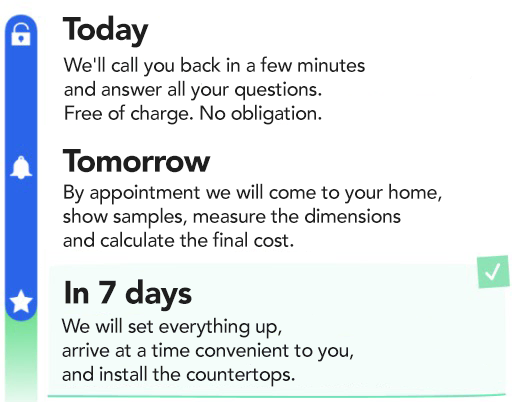
If you are in the Orlando area and considering quartzite for a kitchen, bathroom, or outdoor space, come by the EdStone slab yard. Bring a cabinet sample and a flooring sample. We will pull slabs, walk you through the varieties, and give you a free measurement and quote for your project. No pressure, no sales scripts, just the slab in front of you and honest numbers.
EdStone fabricates and installs granite, quartz & marble countertops across Central Florida, including Altamonte Springs, Deltona, Titusville and Cocoa Beach. See how we fabricate, get a free in-home estimate, or call (407) 973-2074.