The appliance sale looks tempting, and the product description says the same nominal size as the cooktop already in your kitchen. It seems like a simple purchase—until the new appliance’s installation drawing reaches the countertop fabricator.
A cooktop’s advertised width is not its required stone cutout. A range that occupies an opening between cabinets is a different arrangement again. When new granite or quartz and new cooking equipment are part of the same Orlando kitchen project, the exact appliance model needs to be reviewed before the countertop is cut.
Black Friday falls on November 27 in 2026. If you are shopping around the holiday, use the week before it to collect specifications and coordinate the purchase. A useful deal is one that fits your approved kitchen plan, arrives in a workable sequence and includes the installation services you actually need.
Identify which cooking arrangement you have
A cooktop installed through the countertop
A built-in cooktop sits in a specified opening in the countertop. Its outer visible dimensions differ from the opening beneath it. The installation also involves clearances and equipment below, beside and above the appliance, as set out in its documentation.
A new cooktop may cover the old opening while still having unsuitable mounting or clearance requirements. Have the fabricator and appliance installer review the whole arrangement. The fact that the top overlaps the hole is only one part of the fit.
A range between countertop sections
A range typically occupies an opening between cabinet and counter runs. The required relationship to the surrounding counters depends on the exact model and configuration. Product labels such as slide-in or freestanding help describe a category, but the installation instructions establish the details.
A change from one arrangement to another may affect the counter behind the appliance, side clearances, cabinet trim and backsplash. Include those changes in the project scope rather than assuming the old opening can simply be reused.
Make a specification packet before you buy
Collect the full model number and the manufacturer’s installation document. Include any accessories that affect fit, such as a specified trim component or a downdraft arrangement. A retailer’s overall-dimensions diagram may leave out the information the fabricator needs.
Ask the appliance installer to identify the required opening, clearance zones, connection locations and any cabinet modifications. Then have the countertop fabricator review the stone interface. These are connected decisions, but each professional is checking a different part of the installation.
Record the document version or save the exact file used for approval. A link can lead to a product family with several models. A saved installation document labeled with your chosen model makes the basis of the decision clear.
If you are also changing the sink or dishwasher, submit those specifications together. The fabricator can then review the countertop layout as a complete project rather than receiving one changed opening at a time.
Nominal width is a shopping category, not a cutting instruction
Two appliances described by the same nominal width may require different openings or have different mounting details. Compare the manufacturer’s diagrams instead of relying on the large size printed beside the sale price.
For example, a hypothetical replacement cooktop might have a similar visible width but a different front-to-back cutout. That difference could affect the remaining stone at the front or the available space behind it. The correct response is a reviewed layout, not a guess that a little trimming will solve it.
When replacing the countertop as well, there is an opportunity to make the new opening for the selected appliance from the start. Use it. Copying the old cutout can preserve a compromise that no longer suits your equipment.
If keeping the existing stone, have the fabricator assess whether modification is practical. The material, existing opening, access and remaining sections all matter. Do not purchase on the assumption that every smaller opening can be enlarged safely on site.
Check what sits below and above the cooking surface
Below a cooktop, drawers, an oven, cabinet framing and ventilation components can occupy the space the appliance needs. The installer must check the manufacturer’s requirements for the intended configuration. An empty-looking cabinet photograph may hide a rail or connection in the wrong place.
Above it, the hood, microwave, cabinets and wall finishes need to suit the equipment and applicable installation requirements. Changing fuel type or cooking arrangement can expand the work. Bring the relevant trades into the discussion before treating it as a countertop-only change.
For an appliance with downdraft ventilation, review the duct or other specified system alongside the cabinet and countertop plans. Do not assume the previous ventilation arrangement can serve the new product. The equipment documentation and site conditions need to agree.
These checks are particularly useful in a partial kitchen refresh. Existing cabinets and finishes may be staying, but the new appliance still needs its required space. A purchase that forces unexpected cabinet or wall work can erase the apparent saving.
Agree who handles the connections and commissioning
The stone fabricator prepares and installs the countertop. Appliance connection, electrical work, gas work and ventilation work may involve separate qualified professionals. Ask the proposal to identify which services are included and which you must arrange.
Have those professionals review the selected model before purchase if the connection arrangement is changing. The fact that an old appliance worked in the opening does not establish that a new one has compatible service requirements.
Coordinate timing around the countertop installation and the manufacturer’s instructions. A delivery team may place the appliance in the kitchen without connecting or commissioning it. Confirm what the retailer’s installation service covers, especially where other work must be completed first.
Keep the installation documents available for the final checks. The person returning the cooking equipment to service should verify the completed arrangement rather than relying on a photograph of the appliance in its opening.
Decide whether the appliance must arrive before templating
Ask the fabricator what it needs to approve and produce the opening. Some project details can be reviewed from exact documentation; others may need the actual appliance or additional verification. The fabricator should establish the requirement for your installation.
If the appliance is delayed, discuss the options before fabrication begins. Waiting may protect the accuracy of the installation. Proceeding from approved specifications may be possible in some arrangements, but the responsibilities and risks need to be understood by everyone involved.
Do not swap to another model without a fresh review. Retailers may offer a substitute when stock changes, and its title may sound almost identical. Send the replacement specifications to the fabricator and appliance installer before accepting it.
When coordinating a holiday project, leave time to inspect delivered equipment under the seller’s procedures. A wrong or damaged appliance can disrupt several appointments. Keeping the old cooking setup through a gathering may be preferable to beginning work around an uncertain delivery.
What to ask about the sale itself
Compare the complete purchase and installation arrangement rather than the appliance price alone. Confirm delivery timing, included components, the scope of installation, removal of the old equipment and the seller’s return or exchange terms.
Ask what happens if the appliance arrives before the kitchen is ready. You need a suitable storage and inspection plan, and you should understand when any return or damage-reporting deadlines begin. Do not leave the box unopened indefinitely because the countertop appointment is later.
Check who is responsible if the installation team arrives and cannot complete the work because the opening or connections are not ready. Understand any revisit arrangements directly from the retailer or installer. Policies vary, so get the terms for your purchase.
No sale price can compensate for an appliance you cannot install in the kitchen you intend to keep. Confirm fit first, then decide whether the offer is worthwhile.
Protect the finished stone during appliance work
Tell the appliance installer that the granite or quartz is newly installed and share any instructions supplied by the fabricator. Heavy equipment, tools and packaging should be handled with a plan that protects the stone and adjacent finishes.
If an appliance does not fit as expected, stop and bring the fabricator into the discussion. Avoid forcing it into the opening, chipping an edge to gain clearance or authorizing improvised cutting by an unrelated delivery crew.
A trim piece may be part of a manufacturer-approved installation, but it should not be used to conceal an unreviewed fit problem. Ask the installer to explain the finished arrangement and keep the relevant product information with your project records.
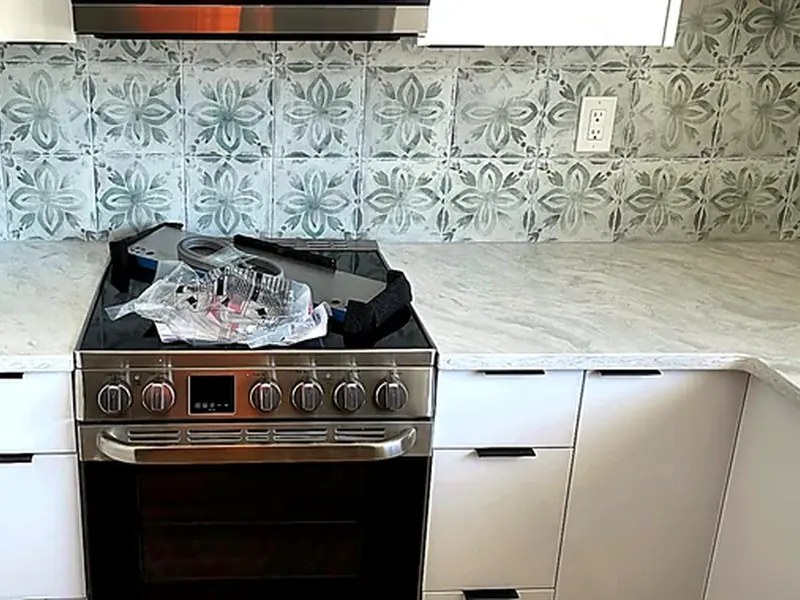
After installation, plan how you will use the adjacent counter
The area beside the range is often where hot cookware lands. Decide where suitable trivets or heat-protection products will be kept so they are ready when cooking starts. Your new countertop’s care instructions should guide that routine.
Granite and quartz have different characteristics, but neither benefits from treating the counter as an extension of the cooking appliance. The existing guide to hot pans on granite and quartz explains the everyday precautions.
Also consider the cleaning access beside and behind the appliance. Review any gaps or finishing components with the installer so you understand the intended detail. A neat-looking joint should be part of an approved installation rather than a last-minute attempt to fill an unexplained opening.
Questions appliance shoppers ask
Can a fabricator cut the stone from the retailer’s dimensions?
The fabricator should specify the documents and verification it needs. Overall dimensions are often insufficient for the cutout and clearance review. Supply the exact model’s installation instructions.
Should I choose the appliance before the slab?
You can explore both together, but finalize the model before the relevant countertop dimensions are approved for fabrication. The opening must suit the equipment you will install.
Can I change from a cooktop to a range during countertop replacement?
It may be possible, but it changes the layout and can affect cabinets, connections, ventilation and wall finishes. Define and price that scope before approving the stone.
Does a retailer’s installation service include stone modification?
Check its stated scope. Do not assume cutting or altering granite and quartz is included. Coordinate any required stone work directly with the fabricator.
Make a substitution decision before the retailer calls
If your preferred appliance becomes unavailable, have a short list of priorities ready: the approved cooking arrangement, required functions, acceptable finish and the date by which the project needs verified equipment. Those priorities help you evaluate alternatives without losing sight of the kitchen plan.
Ask the retailer for the full model number and installation document for any proposed replacement. Send them to the fabricator and appliance installer together, and request confirmation of any effect on the opening, connections, cabinet work or schedule. Wait for that review before treating the alternative as approved.
If the replacement changes the design substantially, compare postponing the appliance purchase with revising the project. Neither decision should be made solely to preserve a sale price. Keep the final accepted model in the project record and check it against the delivered label before installation proceeds.
Coordinate the model before approving the cutout
For a new granite or quartz kitchen countertop, send Edstone the selected appliance information along with your rough layout and kitchen photographs. The installation walkthrough explains where those decisions enter the process. Contact the Orlando team before fabrication approval so the appliance, the cabinetry and the stone are planned as one working kitchen.