
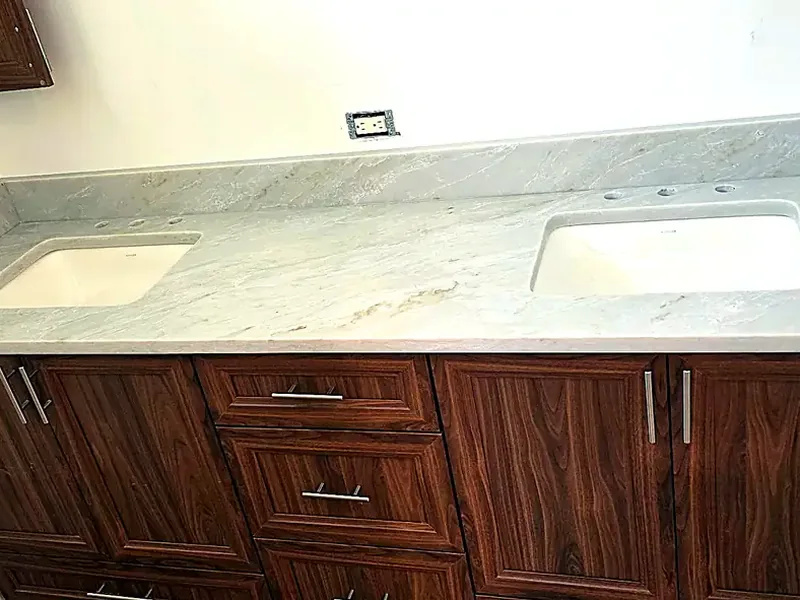
A leftover piece of granite or quartz can be a good match for a bathroom vanity, a small counter or another modest project. The attraction is easy to understand: the material already exists, and your job may fit within what remains of it.
The difficult part is the word “fit.” A remnant’s advertised dimensions do not tell you whether it can produce your finished top, sink opening, edges and backsplash. Nor does the material price tell you the total cost of measuring, fabricating and installing it.
If you are shopping for countertop remnants near Orlando, bring a defined project rather than just a preferred color. Ask the fabricator to lay out every required piece on the usable stone before you reserve it. That turns an appealing leftover into a realistic installation proposal.
What a countertop remnant actually is
A remnant is material left after other pieces have been cut from a slab. It may be a straightforward rectangle, a narrow strip or an irregular shape. It can be natural granite or engineered quartz, with the thickness and finish of the original product.
“Remnant” describes its status as leftover material. It does not establish a lower grade, a particular discount or readiness for installation. A suitable piece can still need all the fabrication steps required for a custom countertop.
Ask the supplier to identify the material as precisely as possible. For quartz, request the product name and available manufacturer information. For granite, inspect the actual piece and discuss its variation and condition. A color name on a label is less useful than the material you are considering.
Availability is specific to the piece. If you need a matching second top later, ask what can realistically be sourced. Do not assume another leftover will have the same appearance, thickness or usable dimensions.
Choose a project that suits a finite piece of stone
A single vanity top is an obvious candidate because the area can be relatively small. Other possibilities include a compact counter, an accent surface or a small room project. Each still needs a suitable support and installation plan for its intended use.
A long kitchen run is a different proposition. Several leftovers that share a color name may have different patterns or batches, and using them can introduce extra joints. Have the fabricator assess whether the result and labor still make sense compared with another material option.
For a vanity replacement, check the cabinet, sink arrangement and wall conditions first. A bargain piece of stone will not solve a damaged cabinet. Edstone’s vanity-top replacement guide covers that part of the project.
If guests are coming for the holidays, avoid ordering from a rough cabinet width alone. A small bathroom still needs final measurements, hardware decisions, fabrication and plumbing. Confirm the sequence before taking its existing sink out of service.
Usable dimensions matter more than overall dimensions
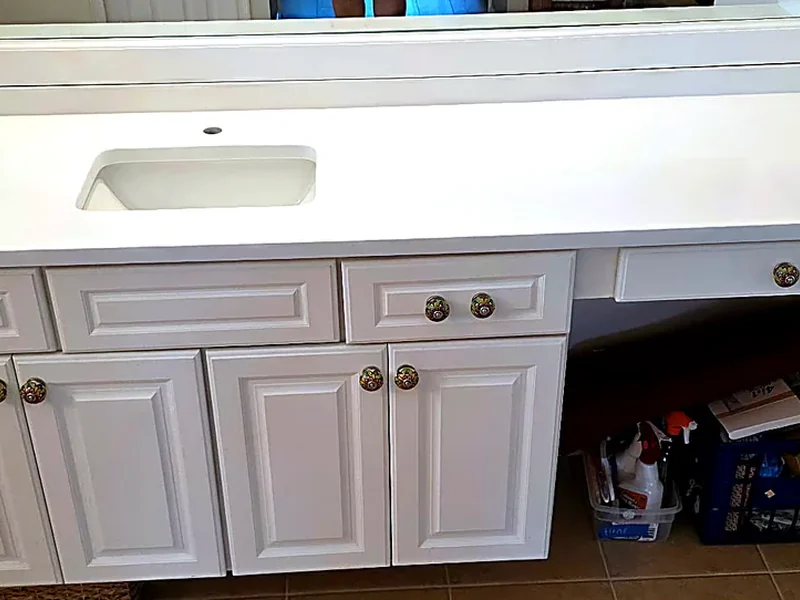
A remnant may include an old cutout, a broken corner, an unfinished edge or an area the fabricator does not intend to use. The usable shape can therefore be smaller or less convenient than the largest width and length on a listing.
Ask the fabricator to mark the area available for your project. The layout must allow for cutting, edge work and the condition of the stone. You cannot safely allocate every last fraction of an inch from a tape measurement taken at the yard.
Natural pattern direction can reduce the useful options too. Rotating a top may make it fit the rectangle but place the movement in a direction you dislike. With directional quartz designs, the same issue can arise. Review the orientation as part of the layout.
Bring rough measurements to begin the conversation, then follow the fabricator’s process for final templating. The countertop measurement guide helps organize that first estimate without confusing it with a production template.
Account for all the pieces, including the small ones
Write a cutting list for the complete scope: the main top, any separate backsplash strips, side splashes and other agreed components. Include the desired finished dimensions and orientation, subject to final verification.
A simple example shows why area alone is misleading. Imagine a top that needs a finished rectangle 49 inches wide and 22 inches deep, plus a separate backsplash. A remnant with a large total area might still be too narrow, have a cutout in the wrong place or lack a suitable strip for the splash.
Even a clean rectangle larger than the top needs fabrication allowances and a reviewed layout. The fabricator should decide whether it yields every piece. These example dimensions illustrate the question; they are not a recommended vanity size or a cutting allowance.
If the matching backsplash cannot come from the remnant, discuss the alternatives before reserving it. You may prefer a compatible wall finish or a different material choice. That decision affects the budget and the finished bathroom, so make it while the whole plan remains open.
A sink opening can determine whether the remnant works
The sink cutout removes material from the top and leaves narrower sections around it. Its position must suit the cabinet, the sink’s installation requirements and the remaining stone. An off-center bowl can change the layout even when the countertop’s outside dimensions stay the same.
Provide the exact sink model and mounting style. For an undermount sink, the opening and its finish are part of the fabrication scope. For a drop-in sink, the rim and product requirements still determine the cutout. A vessel basin creates a different arrangement again.
Do not treat an existing cutout in a remnant as a free feature unless the fabricator confirms it suits your design. Enlarging or relocating an opening may be impractical, and a small mismatch is highly visible around a sink.
Have the faucet and accessories reviewed at the same time. Their holes, mounting parts and clearances must work with the sink and the available countertop depth. A piece that produces the outside rectangle can still fail the complete hardware layout.
Inspect appearance in the exact area being used
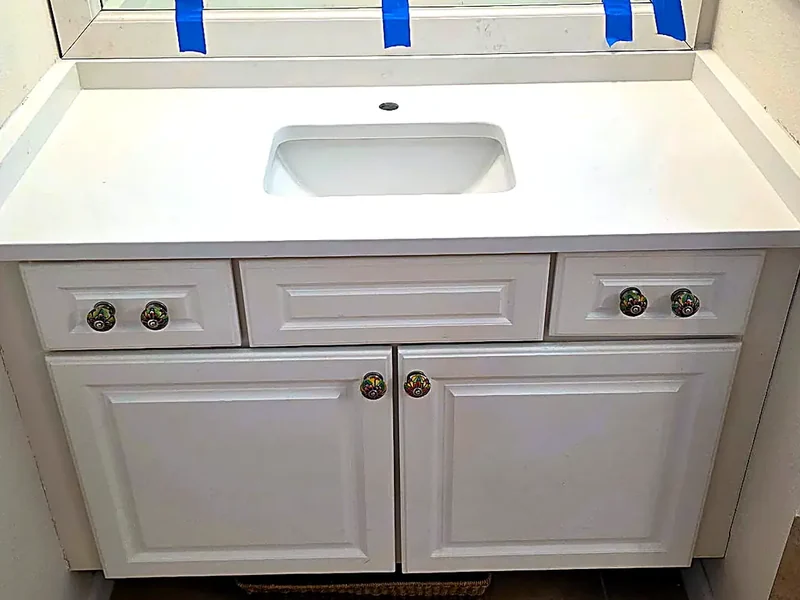
Look at the face of the actual remnant and ask where your top will sit within it. For granite, review the natural movement and any features the fabricator wants to discuss. For quartz, confirm the design, finish and visible condition of the proposed area.
Photograph the selected piece and the proposed orientation with the supplier’s permission. Keep an identifier that distinguishes it from similar material. A photograph labeled only “white quartz” will not help if several pieces are available.
Where practical, compare a sample or the selected material with your cabinet and wall finishes. View photographs cautiously: lighting and screens can change color. If you are choosing remotely, ask the supplier how to review the appearance with the least uncertainty.
Discuss edge condition and any required trimming. A visible edge should be planned from suitable material and finished to the agreed profile. The fact that one edge is already polished does not mean it is the correct edge for your top.
Compare the installed project price
Separate the material line from the work required to turn it into your countertop. Depending on the proposal, the scope may include measuring, cutting, edge finishing, sink fabrication, holes, delivery and installation. Removal, disposal and plumbing may be separate.
Small projects can involve much of the same setup and travel as larger ones. The labor does not necessarily fall in proportion to the square footage. That is why a very inexpensive remnant can still produce a substantial installed quote.
Ask for the same scope when comparing options. One price may cover a fabricated top for collection, while another includes removal and fitting at your home. Add the necessary services before deciding which is better value.
Edstone’s guide to countertop quote differences explains the line-item approach. For a remnant, use it to separate a material saving from any extra fabrication or installation work your particular piece requires.
Clarify documentation, care and reservation terms
Ask what product and installation documentation is available and what coverage applies to your purchase. A leftover’s warranty position can depend on the material, seller and installation arrangement. Obtain the actual terms rather than assuming a full-slab advertisement applies.
Keep the care information specific to the material. Quartz and granite have different maintenance considerations, and granite sealing needs should be assessed for the actual stone. The existing granite sealing guide provides useful background for that discussion.
Before paying to reserve a piece, understand what happens if final measurements show it is unsuitable. Confirm whether it is held while the project is assessed, how long the hold lasts and when fabrication approval becomes binding under the seller’s terms.
If you are arranging your own transport or installation, have the fabricator explain the collection requirements and division of responsibility. Stone handling should be planned by people equipped for it. A small top can still be heavy and vulnerable around its cutouts.
When a remnant is the wrong compromise
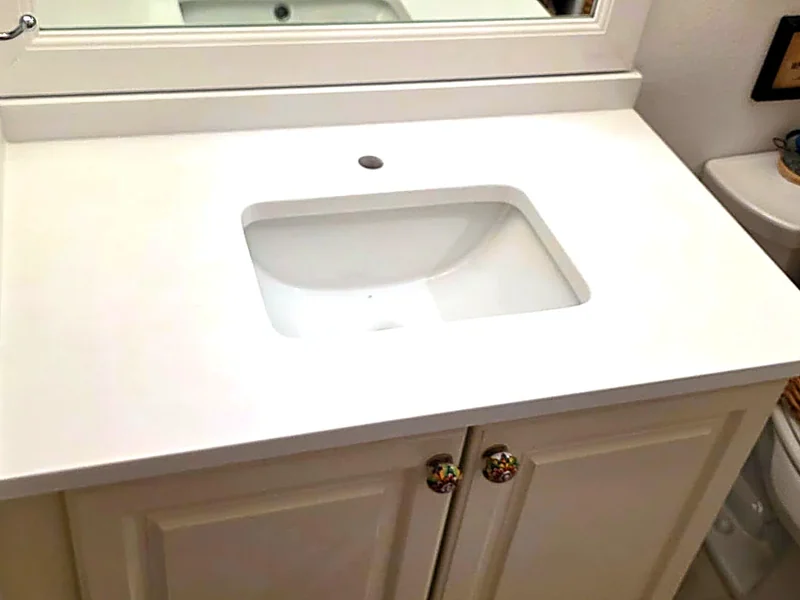
Walk away from a piece that forces a sink position you dislike, an unwanted joint or a pattern orientation you cannot accept. Material savings are useful only if the completed surface still serves the room well.
Be cautious about selecting a piece before the project scope is stable. If you may widen the cabinet, add a second basin or extend the counter, resolve those decisions first. A finite remnant gives you fewer options for later expansion.
Also compare a straightforward standard material option. Once all labor is included, the difference may be smaller than expected. Ask for alternatives that meet your priorities instead of treating the first inexpensive leftover as the only affordable route.
Questions remnant buyers ask
Are countertop remnants always cheaper?
The material may cost less, but the final comparison depends on the complete project. Fabrication, cutouts, transport and installation still need to be priced. Ask for an installed quote for each option.
Can I combine remnants for a double vanity?
Have the fabricator review the layout and appearance. Matching, seams and sink positions can complicate the result. Compare that proposal with a single suitable piece before choosing.
Can I order from photographs and my own measurements?
Photographs and rough dimensions can support an initial estimate. The fabricator should confirm what it requires for final measurement, material approval and production. Follow that process before cutting begins.
Compare two proposals on one project sheet
Suppose one supplier offers a remnant and fabricated top for collection, while another quotes a different material with site measurement and installation. Put the required work on a single sheet: material, final measuring, edges, sink opening, hardware holes, backsplash, delivery, installation, removal and plumbing.
Mark whether each proposal includes the item, excludes it or needs clarification. Then obtain the missing prices from the responsible suppliers. This reveals whether the remnant saves money on the project you actually need, rather than on a smaller package of services.
Also compare the approved appearance and the schedule. A piece that requires an unwanted joint or cannot be completed within your workable dates is a different offer, even if its material line is lower. Keep those differences visible beside the total so the decision reflects both the installation and the finished room.
Ask about fit before asking about the discount
For an Edstone remnant inquiry, send the project type, rough dimensions, cabinet photographs, sink model and desired backsplash scope. Contact the Orlando team to ask about current suitable material and the full installed scope. Inventory changes, so availability should be confirmed for your actual order. A remnant becomes a good purchase when its usable stone, the fabrication plan and your room all agree.